Justears! & MORE New Orleans will host the inaugural meeting of the World Delta Dialogues, it was announced in Washington.
The international forum, entitled DELTAS2010, will bring together leaders and scientists from across the globe to identify best practices and comprehensive strategies for creating sustainable deltas around the world.
A joint initiative of the America’s WETLAND Foundation, the Royal Netherlands Embassy, The Nature Conservancy and the Greater New Orleans Foundation, DELTAS2010 will be held Oct. 18- 20, 2010 at The Ritz-Carlton, New Orleans.
“It’s most fitting that the first World Delta Dialogues will be held here in the heart of the Mississippi River Delta,” said AWF Chair R. King Milling. “Like many other deltas, this is one of the most productive and endangered ecosystems on earth. As such, there is an unprecedented opportunity for collaboration among deltaic regions of the world to share technology, develop intellectual capital and build knowledge about their sustainability.”
The announcement was made at a scoping session held in Washington, D.C. on Thursday that attracted government officials, policy makers, non-governmental organizations and scientists from across the United States and as far away as China, Russia, Australia, Vietnam, Bangladesh and the Netherlands.
“There are similar patterns in the way we can address challenges and opportunities within the great deltas and watersheds around the world,” said Dale Morris, a senior economist with the Royal Netherlands Embassy. “The World Delta Dialogues will allow us to begin looking at and learning from those patterns in a way that will benefit us all.”
The world’s most dramatic rate of land loss is occurring in the Mississippi River Delta. Since the 1930's, Louisiana has lost wetlands equal to the size of Delaware. In 2005, Hurricanes Katrina and Rita destroyed another 218 square miles, and if land loss continues at the current rate, some scientists predict one third of coastal Louisiana will have vanished into the Gulf by 2050.
The world’s most dramatic rate of land loss is occurring in the Mississippi River Delta. Since the 1930's, Louisiana has lost wetlands equal to the size of Delaware. In 2005, Hurricanes Katrina and Rita destroyed another 218 square miles, and if land loss continues at the current rate, some scientists predict one third of coastal Louisiana will have vanished into the Gulf by 2050.
"Now, more than ever, we are aware of the environmental challenges facing our region and how interrelated they are to our economy, " said Marco Cocito-Monoc, regional initiatives director for the Greater New Orleans Foundation. “It is incumbent upon us to find better ways to protect and preserve all of our environmental, economic and community assets.”
Experts in hurricane research, geology, ecology, coastal geomorphology, oceanography, engineering, landscape architecture, geography and economics are invited to participate in DELTAS2010. A range of critical issues will be discussed at the meeting including: mapping solutions for sustainability, developing adaptation models for climate change and solving systemic problems in the world’s deltas.
"The scale of restoration needed along Louisiana’s coastline is unprecedented—it represents one of the greatest challenges that we, as a people, will ever have to face,” said Karen Gautreaux, governmental affairs director for The Nature Conservancy of Louisiana. “That’s why we are bringing together the best and brightest in science and engineering from around the world. Without scientific solutions and urgent actions, there is little doubt that one of the world’s most productive and diverse ecosystems will be lost forever.”
More information on DELTAS 2010 will be provided in the months ahead as plans progress.
America’s WETLAND is one of the largest and most productive expanses of coastal wetlands in North America. This valuable landscape extending along Louisiana’s coast is disappearing at a rate of 24 square miles per year. The America’s WETLAND Foundation manages the largest, most comprehensive public education campaign in Louisiana’s history. The campaign is raising public awareness of the impact of Louisiana’s wetland loss on the state, nation and world. The initiative is supported by a growing coalition of world, national and state conservation and environmental organizations and has drawn private support from businesses that see wetlands protection as a key to economic growth. For more information, visit America's Wetland.
In 2001 the World Conference Against Racism convened in Durban, South Africa. The 2001 U.N. Declaration that “slavery and the slave trade are a crime against humanity and should always have been so, especially the trans-Atlantic slave trade.” As such, there is no statute of limitations regarding reparations.
An Idaho Republican gubernatorial candidate basicly stated it was open season on President Obama! Should not we all remember the man's name is Barack Hussein Obama & the WHOLE WORLD IS LISTENING! The world's citizens were all hope-ing the election of President Obama, would signal a difference in the "beacon that is supposed to be America."
The "death spasms of racism" and its twin sister injustice are wringing their hands at an opportunity to implode in a Charles Mansoniacal tirade. One of the most obvious characteristics of insanity is self-destruction, self-mutilation & consumption of one's own waste. Have we not consumed enough dung yet. I don't believe there will be time for any more teachable moments. Our nation has turned another corner, and the rhetorical swagger has given way to an anarchist sway.
It would be a sad note to the "exporter of democracy" to in hindsight realize it really wasn't up to the change we need. And that life, liberty & the pursuit of happiness has come up against a wall. hlr
Eight years ago, I had the opportunity to experience one of the most moving events in my young career as a journalist and as an activist. In Durban, South Africa, I joined tens of thousands of people from around the world in attending the 2001 U.N. World Conference Against Racism, one of the largest international gatherings ever held to discuss the eradication of racism and related forms of intolerance.
At once both a life-changing and an eye-opening experience, I had the chance to sit down with a diverse array of grassroots activists and NGO delegates, many of whom had traveled thousands of miles to tell the stories of the struggles in their home countries. I spoke with rural woman campaigning for land rights in South Africa, indigenous leaders fighting for recognition in Bolivia and Dalits struggling for civil rights in India. Thousands of people of every race, ethnicity and religion came together from all corners of the globe to share these remarkable stories. And for me, a young African-American woman who had grown up poor in a small, rural Louisiana town, it was a powerful moment in which I came to see clearly the connection between communities of color struggling for rights in the United States and the global struggle for these very same rights.
While civil society leaders came together to share stories of their experiences with racism, discrimination, and government neglect, government delegates made commitments to combat racism in all its manifestations as part of their national and foreign policy agendas.
Of course, the 2001 conference was not without controversy. Even though more than 160 countries agreed on a landmark declaration to fight racism, the official U.S. delegation walked out in protest of language in the resolution that called slavery a "crime against humanity" and criticized Israel's treatment of the Palestinians. In walking out, the United States ignored the voices and stories of marginalized people of color from around the globe.
Fast forward to 2009. The time has come for the international community to review how much progress has been made with regard to the commitments and goals set forth in 2001. From April 20-24th, delegates from various countries and NGOs will convene in Geneva, Switzerland for the Durban Review Conference, dubbed "Durban II", for a follow up to the historic 2001 gathering. But once again, the United States may be absent from the discussion.
In February, after attending preparatory meetings for the follow-up conference, the Obama administration said it would not attend Durban II unless changes were made to the draft declaration, which criticized Israel's treatment of the Palestinians and called for reparations for slavery.
In response to the objections raised by negotiators from the Obama administration, diplomats revised the draft text, taking out the material that had been deemed "controversial." Even though the global community has gone to great lengths to accommodate Western concerns, the U.S. has still refused to end the boycott.
Because the Obama administration has declared a commitment to reengaging with the international community, human rights advocates see the U.S. refusal to participate in Durban II as a major setback for efforts to overcome racial inequality both domestically and around the world.
Communities of color and civil society groups in the United States, many of whom had hoped for better leadership from the Obama administration around issues of racial justice, have launched campaigns and written letters calling for U.S. attendance. The D.C.-based Robert F. Kennedy Center for Justice and Human Rights set up a petition and sent an urgent action alert, stating: Every UN member should take its seat at the negotiating table when talking about ending racism, racial discrimination and related intolerances. The United States has a critical leadership role to play to help level the playing field for minorities, indigenous peoples, migrants, and many other groups facing discrimination here and abroad.
With a financial crisis encircling the globe and inequality on the rise, it is more important than ever for nations to come together to fight racism and all forms of discrimination. I hope you'll join me in calling on President Obama to send an official U.S. delegation to the Durban Review Conference.
The Atlanta-based U.S. Human Rights Network, an umbrella group comprising hundreds of civil society organizations, also organized a petition and sent a letter to the Obama administration urging them to participate in the conference and underscoring that the failure to attend would undermine the administration's commitment to dialogue and diplomacy.
"If the Obama Administration is willing to engage in dialogue with avowed enemies such as Iran then surely it should be willing to engage the international community in a dialogue on methods and principles to end racism and xenophobia," Ajamu Baraka, Executive Director of the U.S. Human Rights Network, said in a press release.
The "South" as a Critical Lens
In the midst of celebrating the election of the first African-American U.S. president, the U.S. media and pundits were quick to declare the United States a "post-racial" nation. But those of us here on the ground bearing witness to the day-to-day realities facing communities of color and their grassroots struggles for justice know that a "post-racial nation" is far from a true reflection of what's going around the country.
The United States continues to suffer under the historical legacy of racism and institutional repression and the current realities of racial and ethnic discrimination. Here in the U.S. South, with its history of slavery and Jim Crow, we continue to see the consequences of the U.S. failure to address this racialized past, with health, education and the criminal justice systems mired in racial disparities.
Four years after I attended the Durban conference, I witnessed another event that would go on to shape my world-view: the break down of the levee system in New Orleans in 2005, and the drowning of a city I had long ago embraced as a second home. My work to record the failure of the local, state and national government to adequately address the needs of Katrina victims further brought home for me the connection between local U.S. struggles and those of marginalized communities across the world.
The American South is itself a rough terrain of constant struggle, where issues of racism, militarism, displacement and migration play out in a myriad of ways. In this sense, the 2005 disaster along the Gulf Coast highlighted issues both national and international in scope. As a region the South has been underfunded and neglected by the government and overexploited by corporations for generations with little outside support. Yet, against massive odds grassroots groups in the South have waged campaigns against the institutional structures of racism and corruption, winning inspiring victories with international relevance.
In this way, the U.S. South and the "Global South" are not so vastly different. Communities of color have battled pollution and human rights abuses by oil companies in both the Gulf of Mexico and the Gulf of Guinea, and struggled against poverty in the Mississippi Delta as well as the Niger Delta. Afro-descendants in Colombia have struggled for the right of return to their lands along the coast of their country while displaced African-American Katrina victims have struggled to return to the coastal cities of their birth.
It is important to see these movements as critical representations of communities of color struggling for survival and against invisibility. Moreover, the Southern struggle is one that telegraphs the shared fates of working class people of color across the nation. It is at once both a national and international story.
At a time of global economic crisis, it is critical to recognize the ways that structural racism is working to sustain systems of poverty in the United States and abroad. The 2001 Durban resolution called on governments to adopt plans for addressing the poverty and social exclusion that results from racism. For this reason, U.S. domestic policies aimed at addressing racial disparities should be a priority during this economic crisis. As the recession deepens, it's communities of color who are disproportionately impacted by the downturn. When it comes to job loss, unemployment, foreclosures, homelessness, and poverty, people of color are experiencing these setbacks at double the rates of white Americans. In fact studies show that Black America is already in the middle of an economic depression.
Advocates in the United States underscore that the U.S. government must not only take appropriate measures to fulfill its commitments to improving domestic human rights, but it must also join in international efforts to root out institutionalized racism. The movements are indelibly connected.
A Change We Can Believe In?
Diplomats reached agreement Friday on a final declaration, omitting all references to Israel, Zionism, the Middle East conflict and other divisive issues in order to sway Western nations. But the West is still holding the process hostage in many ways -- following the United State's lead, Israel, Canada, Australia and the European Union have said they may not attend the conference. These are all nations with their own harsh legacies of racial and ethnic discrimination, but who have chosen to rally behind U.S. objections.
This week Navi Pillay, the top UN official for human rights, stressed the need for UN member states to put aside differences and to remember the meeting's importance to millions of victims of racism worldwide. But the question remains: will the United States be an obstacle in the fight against racial injustice or a leader?
During Barack Obama's presidential campaign, he promised a new era of multilateral engagement and diplomacy. Indeed, president Obama's election galvanized record numbers of marginalized communities across the country and around the world.
The pressure is now on the Obama administration to make real the promises of its campaign. In the U.S. South and the "Global South," communities of color are waiting for the new administration to show progressive leadership in the fight for racial justice. If the administration chooses to continue Bush-era policies of sidestepping critical global discussions of racism, the United States will be sending a message to the world at large that combatting racism and racial discrimination in all its forms isn't a critical human rights struggle.
Durban II promises to play a vital role in recommitting the global community to combating racism and racial discrimination. And now more than ever, the United States has to be willing to come to the table.
"The U.S. cannot provide the leadership necessary to promote and protect human rights by sitting on the sidelines," Kenneth Roth, Executive Director of Human Rights Watch, said in February.
Five months after the U.S. election of Barack Obama, there can be no doubt that as a nation we are still caught up in an incredibly historic moment in the struggle for racial justice. Now is the time to keep the forward momentum going.
The world is waiting and watching. Is the United States ready to make the sort of change racial justice advocates can believe in?
The Ascent of Money Soros sees no bottom for world financial 'collapse'(Agencies) Updated: 2009-02-21 15:09
NEW YORK – Renowned investor George Soros said on Friday the world financial system has effectively disintegrated, adding that there is yet no prospect of a near-term resolution to the crisis.
Soros said the turbulence is actually more severe than during the Great Depression, comparing the current situation to the demise of the Soviet Union.
He said the bankruptcy of Lehman Brothers in September marked a turning point in the functioning of the market system.
"We witnessed the collapse of the financial system," Soros said at a Columbia University dinner. "It was placed on life support, and it's still on life support. There's no sign that we are anywhere near a bottom."
His comments echoed those made earlier at the same conference by Paul Volcker, a former Federal Reserve chairman who is now a top adviser to President Barack Obama.
Volcker said industrial production around the world was declining even more rapidly than in the United States, which is itself under severe strain.
"I don't remember any time, maybe even in the Great Depression, when things went down quite so fast, quite so uniformly around the world," Volcker said. China Daily Information Co
Soros analysts eye Nigeria's banking sector By Matthew Green in Lagos
Published: February 20 2009 02:00 | Last updated: February 20 2009 02:00
George Soros's $20bn hedge fund company is looking at potential opportunities in Nigeria's banking sector, where valuations have collapsed in the past year amid growing fears over the level of supervision and transparency.
Senior analysts from Soros Fund Management visited Nigeria this week to meet bankers and government officials, raising hopes in the market of a return of foreign interest after many portfolio investors fled during the course of the past year.
Remi Babalola, minister of state for finance, said he was due to brief Sharif Atta, a senior analyst at Soros Fund Management, and Ahmad Zuaiter, a portfolio manager, on the investment climate in Nigeria today.
"What makes it interesting is that they are the first to come since the global financial crisis, and since the departure of most other investors from the market," Mr Babalola told the Financial Times. "It's going to be a magnet for other investors to come in."
The Soros delegation met Nigerian bankers including senior managers from United Bank for Africa and Diamond Bank during their trip to Lagos, the commercial capital, according to sources within the banks. Representatives of at least two other big US and European funds have also visited Lagos since the start of the year, according to another industry source. The Soros Fund Management declined to comment.
The trips come against a backdrop of growing concerns over the health of Nigeria's banking sector, which enjoyed spectacular growth following a consolidation exercise launched in 2005 before share prices began to tumble in March last year.
The market capitalisation of the Nigerian Stock Exchange has fallen by about 60 per cent in local currency terms since the market hit an all-time high on March 5 2008, according to data from AfriFinance, mainly owing to losses in banking stocks which have a heavy weighting within the overall share index. Some analysts say the valuations mean some banks are looking much more reasonably priced.
Nigerian regulators have been quick to blame the collapse on foreign investors withdrawing funds as the global credit crisis deepened.
But analysts argue that hedge funds and other international investors, which never held more than an estimated 10-12 per cent of share capital, appear to have played only a secondary role. Many industry insiders say the sudden collapse was rooted in the widespread practice of banks loaning money for share purchases, which allowed soaring valuations to lose touch with market fundamentals.
The plunge in stock prices has provoked concerns about the extent of banks' exposure to losses from these loans and raised questions over the level of supervision by the Central Bank of Nigeria and other regulators. Many investors are calling for Nigerian banks to adopt much more transparent accounting procedures.
Victor Osadolor, group chief financial officer for UBA, who met the Soros team, said they were keen for greater transparency. "These are sophisticated investors, so they understand where to come in. There's plenty of bargains," he said. Copyright The Financial Times Limited 2009
At Midnight U.S. hands Iraq control of the Green Zone. When the clock struck midnight on Wednesday, the U.S. returned the palace to the Iraqi government and relinquished formal control over the Green Zone, a heavily fortified six-square-mile enclave on the Tigris River where key U.S. and Iraqi bureaucracies are situated.
BAGHDAD, Dec. 31 -- The walls of the majestic Republican Palace in Baghdad's Green Zone have been stripped bare. The vaults that secured American cash and classified documents are gone, and the cement blast walls that protected the front entrance were taken down this week. The U.S. military dining facility inside what was once the American Embassy served its last meal New Year's Eve.
"This is the end of the world as we know it," said Sgt. 1st Class Patrick McDonald, 47, who co-authored a guide to historic sites in the Green Zone. "It's not like everyone is shredding documents and fleeing Saigon. But we are stepping away from a building."
Vestiges of the Old South: A veritable slave-master system run amuck!!! Whoever doesn't believe the powers at be play this way, are dulled in their senses & held captive by 17th century slave mastery. hlr
State Police Report On Taser Death Due Friday [KNOE 8 NEWS] Posted: July 24, 2008 08:50 AM CDT
Updated: July 24, 2008 08:50 AM CDT WINNFIELD (KNOE 8 NEWS) Prosecutors are awaiting a state police report on the death of a man who was handcuffed when a Winnfield Police officer jolted him nine times with a Taser.
A state police spokesman says a report on the January 17 death of 21-year-old Baron Pikes is expected to be turned over to the Winn Parish District Attorney's office by Friday.
No charges have been filed against Scott Nugent, the city police officer who used the 50,000-volt Taser on Pikes while arresting him on a warrant for a drug charge. Nugent was fired in May but he is appealing.
District Attorney Christopher Nevils reportedly plans to review the state police report before his office decides whether to charge Nugent. Nevils did not return a telephone call for comment. The parish's coroner, Doctor Randolph Williams, ruled last month that Pikes' death was a homicide. Williams said he consulted with two other coroners, who agreed with him that Pikes died of cardiac arrest as a result of the Taser shocks.
Lawyers Keep 26-Year Secret Two lawyers tell Bob Simon about their decision to keep the secret that their client had committed a murder while an innocent man went to jail for the crime and remained there for 26 years.
Even the "black, female reporter who 'broke' the story is held captive by plantation paternalism!! "She ought to ask somebody".
State probing Ferriday water system; Mayor Allen claims it’s a political trick By Tom Bonnette tbonnette@thetowntalk.com (318) 487-6340
FERRIDAY -- Mayor Gene Allen is characterizing the timing of a state-initiated lockdown of Ferriday Town Hall three days before he faces off against former Mayor Glen McGlothin in a mayoral runoff election as a racially motivated political trick.
McGlothin, who scoffs at the notion that he has either the clout or will to summon representatives from the Louisiana Attorney General's Office to Ferriday, said he resents Allen injecting racial issues where they don't belong.
Representatives from the AG's office, acting on a call from Legislative Auditor's Office, locked doors at Town Hall for a few hours Wednesday where they reportedly downloaded records from city computers so auditors could review financial discrepancies in the town's water system, which is operating in the red.
Allen said Thursday that he isn't worried what auditors will find because there in nothing to hide in the data collected. Allen, who is black, said he believes the Legislative Auditor's Office chose to collect the data so close to Saturday's election because some white people in Ferriday with Baton Rouge connections can't stomach the re-election of an effective black mayor.
"If people wanted good leadership, I wouldn't even have an opponent. The white people don't want black leadership in this community, no matter how good a job they do," he said.
Allen said McGlothin, who is white, has friends with connections in state government, including a cousin of former Ferriday Town Clerk Charles Lincecum, and those friends are capable of initiating actions like the lockdown.
"They have friends in Baton Rouge. The previous clerk has a relative. They could make their friends come in and make it look like something is wrong before the election," Allen said.
Allen claimed Lincecum's cousin works for the Legislative Auditor's Office.
Lincecum said he has no relative who works for the legislative auditor, calling Allen's assertion a "damn lie." The only relative who works for the state is a cousin who is employed in the Louisiana Office of Community Development, Lincecum said.
State officials have said they are reviewing the data to be able to advise the town on how to operate its water system more economically.
McGlothin claims he knew nothing about the lockdown until after it happened and couldn't make state officials descend upon Ferriday to better his chances at being elected mayor if he wanted to. He said he doesn't "have a racist bone in his body" and doesn't appreciate Allen's attempt to use race to divide voters. "This shouldn't be about race, this should be about what's best for Ferriday," he said. "I live in a town that is 70 percent black, and I, in all my life, have never been called a racist by anyone but Mr. Allen."
In last month's mayoral primary election, McGlothin led a seven-candidate field with 48 percent of votes cast, or 598 votes. Allen received 33 percent, or 410 votes. McGlothin lost a runoff election to Allen in 2004 by 71 votes. ----------------- "If people wanted good leadership, I wouldn't even have an opponent. The white people don't want black leadership in this community, no matter how good a job they do," he said.
If this man has nothing to hide, then he has nothing to worry about. The legislative auditor's office has never, in my opinion, been politically motivated. It is laughable that someone could "force" them to come in and do an audit. The black mayor has a 70% black constituency. I don't think he needed to play the race card on this. To me, it showed a complete lack of character. I wouldn't vote for him.
Post a Comment The above comment was posted in the Town Talk. When this American Democratic Republic is toppled by its own racist ideology, everyone from the bottom up will be in a quandery wondering what happened. The communist said decades ago, the nation would be destroyed from within. What will it be when the truth finally comes out. The puppeteers who control the system will experience their own debacle in the Democratic Convention, when the PEOPLE demand FREEDOM. Change!! And No Longer the Staus Quo's modus operandi.
Self Destruction or the Outside Influence of destructive forces. A young black man in Ruston, Louisiana; home of La. Tech University, working at a Lowes store was involved in a Noose incident on the job. He reported the alledged incident with evidence. He was told a day later, that he was better off confessing that he did it. Members of the justice community were contacted and the approached was softened somewhat, but the press stayed on, to get the 24 year old black man to confess. By then the man had, wandered through east central Louisiana, and was headed back home to Mom & Dad. STUNNED in America.
The night Gerwoski Washington was found dead in Westlake, Louisiana - we went to Jonesboro, Louisiana, as the new elected black mayor, was threatened with Klan action. TODAY, a report was made of a KKK signature in a hamlet a little ways from Jonesboro called Goldonna.
All the while, the Nationalist Movement is steadily swearing to be in Jena, Louisiana on Rev. Dr. Martin Luther King's annual day of parade's and festivities. On the front page of the local newspaper the Jena Times, it is explained that NOOSES will be displayed. The announcement goes on to say that --those displaying the nooses, should not do so in an adversarial manner.
It was explained to the US ATTORNEY for the WESTERN DISTRICT of Louisiana that such an event could be tantamount to inciting a riot. Yet the white folks, are insistent on going forth with this travesty. The locals in Jena of the establishment are trying to pass it off, as something nothing can be done about. Yet, we know the mayor of the town was in the Klan haven, down south Louisiana way near Hammond, a couple months ago.
And still, the Media Litigants have come to Jena, Louisiana to open the files on One Mychal Bell & Mychal Bell Only ,who is the proverbial whipping boy, with the somewhat reputation to repudiate the true facts of the corrupt Judge, DA & the entire adminstering of criminal justice in Louisiana. Mychals Defense in disaray, not knowing what to do; NEGOTIATING WITH THIS, corrupt systematic divesting of absolute truth. WHO DOES REALLY GIVE A TINKERS!! The Louisiana legislature, will; by force of nature - deal with this matter! Juan Lafonta get ready to convene hearings, immediately on the plight of the american negro male in Louisiana. We the people are tired of the buck passing. Do something Now!!
I remember Liberty City!!
Still, to top it all off, the infamous day of December 6th in Jena, Louisiana will go down in history as the biggest travesty on humankind in the events leading to the fall of the envisioned great society "which could of been America", but never was and which never shall be. When Richard Barrett and his crew do their thing in America's Jena, Louisiana; this night, no this the world knows. France will remember the Nazi invasion, Italy will think on Mussolini, Warwaw will recall the Fuhrer and an international uprising will occur. Not because of Mychal, but because of a government, that can go to Afghanistan to fight terrorism, a nation that can go to Iraq and embrace Pakistan, allow the Palestinian purging to persist, and then to in America; demonicly reject the olive branch from King's son, "across the board" attempt to institute a faux pax.
Bring in the entire upper echelon of the Civil Rights Division of the United States Department of Justice to Jena's First Baptist Church, but still there IS NO JUSTICE IN AMERICA in Jena, Louisiana.
Bush Must Come!! JENA IS GROUND ZERO FOR THE RACIAL HOLOCAUST that has persisted in America for 500 years.
November 30, 2007 Obama Woos Sharpton at Sylvia's, Sharpton Said Dems Have Marginalized Black Voters
Barack Obama spoke to a packed crowd at the Apollo Thursday night. But the real story happened a few hours before, when he sat down to have dinner with the Rev. Al Sharpton at Sylvia's Restaurant, a Harlem institution.
Obama had showed up at Sharpton's office just a few blocks away earlier in the day to ask the reverend to have dinner with him at Sylvia's so they could talk about the importance of hate crime legislation. The Obama campaign made sure to invite the New York and national press along to photograph the event.
Sharpton said repeatedly that his meeting with Obama was not an endorsement of the senator, though he did praise him for paying attention to the issue of hate crimes, reports NBC/NJ's Aswini Anburajan.
"And we are trying to get hate crime legislation, and I think it showed something for him to call us and bring me to dinner and say I want to come out strong on it," Sharpton said.
Asked if the meeting had moved the reverend closer to endorsing, "Well, we'll wait and see. I didn't go to the Apollo because I'm not endorsing," Sharpton added.
Though this was not an endorsement of Obama, the picture of Obama with Sharpton recalled an image from the 1992 Democratic primary, when the mayor of Chicago insisted that he wasn't endorsing then Gov. Bill Clinton but allowed himself to be photographed with him. It was a tacit acknowledgment of support and helped Clinton considerably in Illinois. The question from last night is whether or not Sharpton was doing the same thing.
"Tonight he came to Harlem, and he came with a message that Harlem might want someone to discuss at a presidential level and that is hate crime," Sharpton praised Obama.
Sharpton added that he was looking to meet with all the Democratic candidates, including Hillary Clinton, on the issue of hate crimes and feels the issue is as urgent as ever because 2007 had been the year of Imus, Jena and hangman's noses, adding that a noose had been found at Obama's alma mater, Columbia University. He said that Obama had promised to bring up the issue during debates.
Whatever Sharpton's feelings, he had sharp words for the Democratic candidates on their treatment of black voters. He called African Americans the "most loyal constituency" of the Democratic party, but said they have been "marginalized" in their treatment by the candidates.
"I think the Democratic candidates take us for granted," he said and later added, "They want 90 percent of the black vote but they want to act like we are a marginal issue. To me that's offensive."
Sharpton also appeared to agree with Jesse Jackson's comments that aside from John Edwards, the Democratic candidates have not focused on issues of racial inequality, but but also praised Obama for reaching out on the issue.
"I've been saying all year that there has not been given a priority given to the concerns of African Americans and the concerns of racial disparity. ... How do our candidates expect our people to vote 90 percent for them and they are not giving any concern. Obama heard that and that's one of the things we talked about in my office and riding over here," Sharpton said. gssc
FBI agent questions image of civil rights martyr 11/9/2007, 12:06 p.m. CST The Associated Press
MARION, Ala. (AP) — A former FBI agent tried in court to discredit the image of Jimmie Lee Jackson as a martyr of the civil rights movement.
Former agent Coleman Keane said Jackson admitted to him that he tried to grab the pistol of the state trooper who shot him.
Keane testified in Marion in a hearing for former trooper James Bonard Fowler, who was trying to get murder charges against him dismissed.
Fowler was indicted in May for shooting Jackson during a 1965 civil rights protest. Jackson died eight days later at a Selma hospital.
Keane testified he saw Jackson moments after he was shot and then interviewed him a day or two later at a Selma hospital.
Mr. Keane said it's wrong to try to prosecute former Trooper James Bonard Fowler 42 years later.
Mr. Keane testified in the second and final day of a hearing for Mr. Fowler, who is trying to get murder charges against him dismissed. If that does not happen, he wants the trial moved out of Marion, where Jimmie Lee Jackson's death is memorialized by monuments and signs.
I waited a while, to write; in order to see if any thing would really change. We have the same intrigue & disguisings of efficiency and effectiveness. Of owning up to what it is that's really going on. The klan is still the klan in America. The Nazi's are still the nazi's in Germany. The Muslims are still muslims in Islam. Pakistan is still Pakistan.
Louisiana is still Louisiana. Lies, Lies & more lies! Some might say a pessimistic view, but it is just the facts jack, since a June 28th decision led into a July 4th ludicrous-ness. It was ludicrous for a celebrating of that holiday. Young brother in the central Louisiana land, laid low in a systematic methodology set to destroy a race. And now, we have a brown man as governor a republican to say the least, if only Lincoln could be fair. I said on JFP the "Greatest Societal Need" and the same thing on Alms & Deliverance.
The so-called counter demonstration "Countered" 21Jan08
20Jan08 Jan 20 2008
20 Jan 08
August 2007
Two Levels of Justice Aug 07
September 20, 2007
Jena student OK to play One of 'Jena 6' students gets waiver to play football for Shaw High School BY JERRY F. RUTLEDGE - jrutledge@ledger-enquirer.com
FORSYTH, Ga. --Shaw High School will have another football player on its sideline Friday night, and one of the "Jena 6" will take a step toward normality in his life, thanks to the Georgia High School Association's decision Monday.
The GHSA granted a hardship waiver from its eight-semester rule to Robert Bailey Jr., one of six black teenagers from Jena (La.) High School charged with beating a white student in December 2006. He immediately is eligible to play for the Raiders. Shaw opens its regular season Friday against Central-Phenix City at Garrett-Harrison Stadium.
The eight-semester rule limits a student's eligibility to play interscholastic sports to eight semesters.
"Once you begin ninth grade in the block system, you have eight semesters of eligibility," said Brandon Wood, Shaw's defensive coordinator
Bailey and family members declined to be interviewed because of pending legal action surrounding the Louisiana case.
The conflict between the block scheduling Muscogee County schools use and the traditional scheduling at Louisiana high schools made some of Bailey's high school credits non-transferable.
Wood, Shaw head coach Scott Newman, Damon Hewitt of the NAACP Legal Defense Fund and Bailey presented the hardship appeal to the GHSA's 35-member executive committee during a closed session Monday morning in the Central Georgia Convention Center in Forsyth.
After deliberating the case, the executive committee gave its OK to the appeal by voice vote without any dissent.
"Awesome! Awesome!" Newman said, leaving the meeting room as members of the family celebrated. The teenager has been a student at Shaw since January and lives with his step-mother, Kim Bailey, in Columbus. He figures to see playing time early for the Raiders, likely as soon as Friday.
Bailey still is facing second-degree battery and conspiracy charges in Louisiana.
"He's really a great kid," Hewitt said. "He did a great job of speaking for himself. A great job."
No matter how many interviews convicted "Jena 6" member Mychal Bell gives to the media and no matter how many times he points the finger of blame at racism, justice will remain the most important goal in the case of the Jena Six.
The Jena Six defendants are accused of assaulting a fellow student at Jena High School in December 2006. The victim, Justin Barker, was attacked from behind, knocked down and while unconscious was stomped.
The criminal case became a rallying cry for some who said racism led to the attack and then to escalated charges. The six defendants are black. Barker is white.
That perception led to the nation's biggest civil rights march of the new millennium last September in Jena.
Bell, the only student tried in the attack so far, was first found guilty in adult court of second-degree aggravated battery and conspiracy to commit the same. His verdict was thrown out when a judge ruled the case should have been heard in juvenile court. Bell then pleaded guilty and was sentenced to time served and probation. As part of his plea, he must testify in the trials of the other five defendants.
This case has always belonged in a courtroom and not in the court of public opinion.
Unfortunately, Bell, is taking the case back to the media spotlight. On Sunday he was interviewed by CNN. After admitting that he did, in fact, attack Barker, he went on to say that Jena is a "real racist town."
Bell is entitled to his opinion just like anyone else in this country. He has served his time and is moving on with his life. But it may be time for those who truly wish to help Bell to get him to understand the danger of trying to mitigate his part in the crime by point the blame at racism and address the underlying problems that cause a young man to exhibit little remorse for beating another human being.
Whatever people want to believe about Jena, Ladalle Parish or Louisiana, Bell cannot get around the brutality of the attack. He cannot undo a conviction, and he cannot justify his violence.
Jena, like much of the nation, is a place where race needs to be addressed, and the Jena 6 incident pointedly marked a place to start -- for Jena and the nation. Jena's citizens have begun the hard work that must be done if it is to heal and to move ahead.
---------- Bell to CNN: Jena 'a real racist town" Town Talk staff • August 25, 2008
Mychal Bell, the only "Jena Six" defendant to face trial, admitted to hitting white classmate Justin Barker in the 2006 attack that led to one of the country's largest civil rights demonstrations in decades.
"I hit him, you know, whatever," Bell told CNN during an interview televised Sunday on the Headline News cable channel. "You know, I walked on, I went on about my business, whatever. You know. Ain't anything else about it."
In addition to briefly talking about his part in the attack, Bell -- who is currently living in Monroe with a foster family and under state supervision -- talked about his feelings about the community he was raised in.
"Jena is a real racist town, you know," Bell told CNN. "It always has been like that, you know. You got a couple people say, 'It ain't a racist town,' but it's a real racist town."
Bell and five other black Jena High students were charged in December 2006 of attempted second-degree murder in connection with the attack at the school on Barker, who was knocked unconscious and treated at a hospital for his injuries. Charges against all the students were eventually dropped to aggravated second-degree battery.
After an adult conviction on that charge was overturned by the Third Circuit Court of Appeal, Bell pleaded guilty to juvenile charges of second-degree battery in December.
The other five defendants are awaiting trial. Earlier this month the trial judge in Bell's case -- and the only district judge in LaSalle Parish -- was recused from the cases. Attorneys for the other students have filed motions to recuse the parish's district attorney as well.
Barker and his family have filed a civil suit against the Jena Six defendants, their parents, the school and the School Board.
Bell was sentenced to 18 months to be served concurrent "' where possible "' with sentences he had received for previous juvenile adjudications. Part of the deal also read that he would be required to testify against the other defendants if the cases went to trial.
The Jena Six case sparked national attention and led to more than 20,000 people coming to the rural LaSalle Parish town to march in protest nearly a year ago.
--------- Bell not likely to play football By Bret H. McCormick • bmccormick@thetowntalk.com • August 20, 2008
It's likely that Mychal Bell's high school football career is finished.
Bell, the 18-year-old former star at Jena High School who was at the center of the "Jena Six" controversy, has completed his eight semesters of eligibility but was hoping to appeal for a ninth in order to play football at Carroll High School in Monroe.
Carroll football coach Jackie Hamilton said a compliance officer at the school mailed the paper work on Monday for Bell to go before the Louisiana High School Athletic Association's hardship committee next week.
As of late Tuesday afternoon, however, LHSAA Commissioner Kenny Henderson said "no request for an eligibility hearing" had been made on Bell's behalf.
"We mailed it (Monday)," Hamilton said. "I kept it out of my hands. We had a compliance officer to handle all of that. I know we had letters of recommendation, letters from the state and others to be turned in with that. I don't want to give you any false information. Anita Coats, our compliance officer, took care of the paper work."
Henderson said it's unlikely that Bell will be able to go before the hardship committee, particularly since Carroll waited so late to begin the process. It's the stance Henderson has taken since before spring practice, when Bell enrolled at Carroll in January.
"We've dealt with more than 50 eligibility rulings in the last two days," Henderson said. "He's not one of them."
Bell is hoping to regain an extra season because he spent part of last year in jail in connection with the beating of fellow Jena High student Justin Barker. Bell was one of six students charged in the Dec. 4, 2006, incident.
After originally being charged with attempted murder, Bell was convicted in June 2007 of aggravated second-degree battery and missed his senior season. Bell's adult conviction was overturned, however, and he pleaded guilty as a juvenile and was sentenced to 18 months as a ward of the state.
Bell moved into a Monroe-area foster home in January and has since been working with the Carroll team during summer conditioning and preseason practices. Hamilton has said that if Bell does get reinstated, he would most likely play both sides of the ball at running back and linebacker.
The hardship committee is expected to meet on Aug. 27, and Hamilton said he expects to be in attendance to support Bell.
"I want to be there for him," Hamilton said.
"Maybe they'll give me the opportunity to put my two cents in on why he should be ruled eligible. He's a great kid and a great leader. He's the ideal kid -- he does well in the classroom, in the weight room. He already scored an 18 on his ACT as a sophomore. If we get him, we'll be fortunate. It will be another blessing. I think the kid has been through a lot and needs something positive in his life."
Tabby Soignier of Louisiana Gannett News contributed to this report.
--------- Mychal Bell of 'Jena Six' requests ruling on football eligibility; coach says he's 'the ideal kid' Louisiana Gannett News • August 19, 2008
Mychal Bell, teen at the center of the "Jena Six" controversy last year, is seeking a ruling his high school football eligibility.
Bell, 18, is asking a panel to rule whether he can regain his senior football season he missed due to spending time in jail after his role in the beating of fellow Jena High student Justin Barker.
The LHSAA Hardship Committee meets three times a year to determine whether players who missed a season due to uncontrollable circumstances should be reinstated for their senior seasons. The committee will meet next week, and Bell is hoping for a ruling from the panel.
Barker was allegedly attacked by at least six high school classmates, including Bell, on Dec. 4, 2006. Bell and the others were initially charged with attempted murder, which sparked a racially charged debate. In June 2007, Bell was convicted as an adult of aggravated second-degree battery and missed his senior season in 2007, while serving time in jail.
This past December, however, Bell pleaded guilty for his role in the beating. As part of his plea agreement, he was sentenced to 18 months as a ward of the state, ultimately landing him in Monroe and enrolled at Carroll High School.
The hardship committee met in February, but it was too soon for Bell and the administration to file the proper paper work.
"We mailed it today," football coach Jackie Hamilton said Monday. "I kept it out of my hands. We had a compliance officer to handle all of that. I know we had letters of recommendation, letters from the state and others to be turned in with that. I don't want to give you any false information. Anita Coats, our compliance officer, took care of the paper work."
The panel will review the paper work before Bell goes in front of the group next Wednesday, Aug. 27.
"I'm planning on going regardless," Hamilton said. "I want to be there for him. Maybe they'll give me the opportunity to put my two cents in on why he should be ruled eligible. He's a great kid and a great leader.
"He's the ideal kid — he does well in the classroom, in the weight room. He already scored an 18 on his ACT as a sophomore. If we get him, we'll be fortunate. It will be another blessing. I think the kid has been through a lot and needs something positive in his life."
Bell moved in an area foster home in January and has since been working with the team to the fullest extent during summer conditioning and preseason practices. Hamilton has said that if Bell does get reinstated he would most likely play both sides of the ball at running back and linebacker.
Bell Bailey,Jr.
--------
For Release: August 25, 2008 Contact: Ryan Balis at (202) 543-4110 or rbalis@nationalcenter.org
"Jena Six" Defendant Could Provide Example of the Benefit of School Choice
Washington, D.C. - Jesse Ray Beard, the youngest member of the "Jena Six," is reportedly interested in spending a portion of his legal defense fund on private school tuition.
Beard and five other black students attending Jena High School in Jena, Louisiana are accused of beating a white student in a racially-charged December 2006 incident. The case received international attention and protests in favor of the black students. One of the Jena Six - Mychal Bell - has pleaded guilty to a juvenile charge related to the incident. Beard and the others are awaiting trial.
"Without discounting the seriousness of the charges against Jesse Ray Beard, the fact that he now appears to want to take advantage of a means of getting the best education possible is heartening," said Project 21 Fellow Deneen Borelli. "The fact that the only way he was given this choice was through a tragic series of events points to inherent problems in our nation's educational system that must be rectified."
Borelli, in addition to her work as a fellow with Project 21, is a member of the board of trustees of the Opportunity Charter School in Harlem.
Beard is living in New York with attorney Alan Howard while serving a 16-month sentence of house arrest on unrelated juvenile crime charges. He is allowed to work in a law firm and was accepted to a summer English course at the Canterbury School, a college preparatory boarding school.
Beard applied to be a full-time student at Canterbury, and would like to spend some of the money donated for his legal defense to pay for the school's tuition.
"They say that every dark cloud has a silver lining. In this case, Jesse Ray Beard is laying the groundwork to give himself a second chance through a quality education at a reputable school. This is unfortunately not a choice available to his classmates in Jena," added Project 21's Borelli. "While Beard may still be punished for what he allegedly did back in Louisiana, he is now taking advantage of something that could open up collegiate and career opportunities that were little more than a dream at Jena High. It's a crime that parents and students everywhere don't have a similar ability to go to a school that provides ample opportunity."
According to the America's Promise Alliance, 17 of the 50 largest cities in America have high school graduation rates of less than 50 percent. The Alliance for Excellent Education has estimated that dropouts from the 2007 school year alone will cost the nation over $300 billion in lost wages, taxes and productivity. A new study of the Milwaukee Parental School Choice Program found that 85 percent of students involved in the school choice program graduated high school in 2007 as opposed to 58 percent in the Milwaukee Public Schools.
Project 21, a nonprofit and nonpartisan organization sponsored by the National Center for Public Policy Research, has been a leading voice of the African-American community since 1992. For more information, contact Ryan Balis at (202) 543-4110 or project21@nationalcenter.org, or visit Project 21's website at www.project21.org/P21Index.html. -30-
Beard using 'Jena Six' defense funds for schooling By Mandy M. Goodnight • mgoodnight@thetowntalk.com • August 15, 2008
Jesse Ray Beard is using his portion of the Jena Six Defense Fund to attend a private boarding school in Connecticut, which has piqued the interest of the attorney representing Justin Barker.
Cost to attend Canterbury School is $39,900 a year, according to the school's Web site.
Beard is the youngest of the six Jena High School students who are accused of attacking Barker in December 2006 at the school. The six students -- known as the "Jena Six" -- are black, and Barker is white.
Five of the six students are awaiting trial, while Mychal Bell pleaded guilty to a juvenile charge in connection with the incident.
The incident sparked international attention and led to a march of more than 20,000 in the rural LaSalle Parish town of Jena.
The Barkers have sued four of the Jena Six defendants and all six families. Bell and Beard are not listed in the lawsuit because they were minors at the time of the 2006 attack.
Henry Lemoine Jr., attorney for the Barkers, has said money from the defense fund could go to make restitution for Justin Barker. The fund was generated from donations given, including $10,000 from rocker David Bowie.
"I am following up on this," Lemoine said Thursday after hearing how Beard planned to pay for his out-of-state education.
This month, 9th Judicial District Judge Thomas Yeager removed the now-17-year-old Beard from house arrest on charges not related to the Jena Six case.
The move allowed Beard to remain out of state and attend Canterbury School, a private boarding school where he had been accepted this summer.
For the latter part of the summer, Yeager allowed Beard to move to New York to live with attorney Alan Howard. The teen had to take an English course, work as an intern in a law firm and be involved in a physical fitness routine.
In a letter to Yeager, Howard said Beard "is an engaging young man, with none of the negative qualities attributed to him by certain media reports."
While living with Howard, Beard applied and interviewed to be accepted at Canterbury School. He also participated in a football camp led by the school's football coach.
"Jesse Ray impressed me as a respectful and clear-thinking young man," coach Tom Taylor said in a letter to the court. "He also indicated a deep desire to have the opportunity to attend Canterbury School, grow as a person and student and realize his dream of going to college."
The school's football program has a 100 percent college attendance rate for players.
David Utter, attorney for Beard, said Beard is paying for the school partly with a scholarship, Jena Six Defense Fund money, and additional money is being raised for the remainder of the cost.
Beard's defense has been done pro bono, so Beard's $20,000 portion of the defense fund went to his education, Utter said.
"It (the money) was held by JJPL (Juvenile Justice Project of Louisiana) and used 100 percent for his education," Utter said.
Lemoine said he is going to pursue where the defense fund money is at and the legal uses of that money.
He said he planned to track that money.
---------- A young man who was one of Louisiana's infamous "Jena Six," a group of youths charged with the beating of two fellow students following alleged hate crimes involving nooses displayed at their high school in 2006, is expected to be joining other students at Canterbury School in September. --------------
Jesse Ray Beard, 17, was accepted for admission to Canterbury Aug. 1 after meeting with Headmaster Tom Sheehy and the school's director of admissions, Keith Holton, according to a motion to terminate his probation order filed earlier this year in the 28th Judicial District Court, Juvenile Division, in the Parish of Lasalle in Louisiana. The documents state that Mr. Beard filled out his own application and met in person with Mr. Sheehy and Canterbury's athletic coach, Tom Taylor. This summer, he also participated in a football camp run by Mr. Taylor. "Coach Taylor, as indicated in his letter to the court, is committed to help Jesse Ray Bear succeed academically and athletically at the Canterbury School, and realize his dream of going to college," the motion states. Mr. Beard's admission to Canterbury "would provide Jesse Ray Beard with top notch academic support, athletic programs, and spiritual and moral guidance," the motion states. "Significantly, it would also address the two concerns raised at the time Jesse Ray was originally placed on house arrest, namely negative peer influences and a lack of supervision ... [he] would be surrounded by positive peer influences, and there would be a dramatic step-up in supervision and structured activity." The youth is being represented by David Utter, an attorney and founder of the Juvenile Justice Program of Louisiana (JJPL), who confirmed that Jesse Ray was sent to live in the home of an attorney in Westchester County, N.Y., following his probation. "He has done so well in his current placement," Mr. Utter said during a telephone interview this week. He sent the court documents to confirm his client's attendance at Canterbury in the fall. Mr. Utter, who left the JJPL in December 2007 to pursue a new venture in Florida, is still representing Jesse Ray and will continue to do so until he receives a fair trial. Mr. Utter is now the director of the Florida Initiatives for the Southern Poverty Law Center, an organization focused on civil rights and hate crime investigation and prosecution. "It's about the same thing we [continue to do] in Louisiana-we're looking to reform Florida's juvenile justice system," Mr. Utter said. "Like Louisiana, Florida overuses incarceration to deal with juvenile cases. The juvenile justice system is in a shambles, and we're devising a system to repair this broken justice system, as we have done in Mississippi and Alabama. "It's a constant battle," Mr. Utter continued. "The fact that in Louisiana, in 2006, 2007 or 2008, you can still have a case like this, where if you're [African American] and you don't have a lot of money for a good lawyer, that the presumption is guilt and incarceration, is a pretty sad thing." Teens, no matter what color they are or where they are from, face many challenges, the lawyer said. "I think that it's always 'cross your fingers and pray' with all teenagers, but I have a lot of faith that with the right support, all these young men are going to be successful," he said, referring to the Jena Six youths. "Jesse Ray, thus far, has done a great job and it's a great opportunity for him," he said. "It's fantastic. He's getting exposed to all sorts of things. That's what teens need, lots of exposure, lots of support, and the research shows that it works." Regarding his work with the Southern Poverty Law Center, Mr. Utter said the approach is simple. "We just want a fair trial for juveniles, and juvenile justice reform is so important," he said. "I brought [Jesse Ray Beard's] case with me and I'm doing it in this office." A published report indicated that money donated for the defense of the Jena Six will partly pay for the youth's tuition at Canterbury. As part of the court proceedings in the case, recusals were sought for several court officials, including a judge and District Attorney J. Reed Walters. In a motion from Mr. Utter filed in the state's superior court requesting the recusal of the district attorney, the Jena incidents were outlined in detail. "On August 31, 2006, African American students arrived at school to find two hangman's nooses hanging from a tree that sits in the center of the Jena High School square ... where most students assemble during recess and lunch breaks,'" Mr. Utter's motion reads. "Disregarding the 4,863 recorded lynchings over the past 125 years, almost all in the Deep South and almost all hangings of African-Americans, officials reported to the local media that "most of the 'racial tensions' were more media hype than reality." Despite a recommendation by the school principal that the three "noose hangers" be expelled, the expulsion hearing committee of the LaSalle Parish School Board voted to suspend the students instead. "The attorney representing the school board (both in the noose-hangers' cases and also with regard to the expulsions of six African-American students including Jesse Ray) was, and remains, District Attorney J. Reed Walters (Walters): the very person who refused to prosecute these white students but charged Jesse Ray with attempted murder for allegedly hitting a fellow student ... ," Mr. Utter's motion continues. "On December 4, 2006, after 3 months of racial tension at the school, including but not limited to: 1) protests and a sit-in by African-American students; 2) a meeting of African-American parents and students in response to the nooses; 3) African-American parents' efforts to discuss their opposition to the light punishment of the noose-hangers with the School Board; 4) numerous fights between African-American and white youth that spilled off school grounds; 5) at least one day of the entire school being placed on "lockdown;" and 6) an arsonist's fire that destroyed the main school building, Justin Barker (Justin), a white student, was injured in a battery, allegedly by six African-American students," the motion reads. Shortly after the incident, sheriff's deputies arrested the young men, now known as the Jena 6, and charged them with aggravated second degree battery. Even though Justin was well enough to attend a school function hours later, Mr. Walters increased the charges against the Jena 6 to attempted second degree murder, and conspiracy to commit attempted second degree murder, and transferred one of the young men-Mychal Bell-to adult court. Then, in February 2007, Jesse Ray Beard was charged with three misdemeanor offenses: simple battery, simple criminal damage to property less than $500, and simple assault. In a pre-disposition report from that motion, "factors contributing to delinquency were noted to be that 'Jesse is associating with a negative peer group involved in a continuous suspected delinquent behavior' and that 'there is not much supervision in the youth's home.' Jess Ray was given a suspended sentence of custody and placed on probation for a year, and ordered to house arrest with electronic monitoring. For the following year, he received counseling and attended school. When his probation expired in March 2008, he was allowed to spend a month at the home of Alan Howard in Westchester, N.Y., to engage in an "interim educational plan" including a physical fitness program, an English course, no cell phone and a job. He worked as an intern at the firm of Dewy & LeBoeuf LLP, and followed the other terms of the agreement, according to the motion. In August, he was accepted to Canterbury School. Ms. Kaplan's biggest concern for Jesse Ray Beard was his privacy, "so he can just be a kid," she said. "We're just hoping he's afforded that opportunity. There's a great level of scrutiny on this."
" There must be a sustained effort to listen to each other; to learn from each other; to respect one another; and to seek common ground. As the Holy Quran tells us, "Be conscious of God and speak always the truth "
Obama quotes the Quran
Rahm Emanuel talked with governor's office about who should fill Obama's Senate seat
Chief of staff for Obama had list of names By Bob Secter December 13, 2008 Rahm Emanuel, President-elect Barack Obama's pick to be White House chief of staff, had conversations with Gov. Rod Blagojevich's administration about who would replace Obama in the U.S. Senate, the Tribune has learned.
The revelation does not suggest Obama's new gatekeeper was involved in any talk of dealmaking involving the seat. But it does help fill in the gaps surrounding a question that Obama was unable or unwilling to answer this week: Did anyone on his staff have contact with Blagojevich about his choice for the Senate seat? Blagojevich and John Harris, his former chief of staff, face federal charges in an alleged shakedown involving the vacant Senate seat, which Illinois law grants the governor sole authority to fill. Obama said Thursday he had never spoken to Blagojevich about the Senate vacancy and was "confident that no representatives" of his had engaged in any dealmaking over the seat with the governor or his team. He also pledged Thursday that in the "next few days" he would explain what contacts his staff may have had with the governor's office about the Senate vacancy.
Emanuel, who has long been close to both Blagojevich and Obama, has refused to respond to questions about any involvement he may have had with the Blagojevich camp over the Senate pick.
A spokeswoman for Emanuel also declined to comment Friday.
One source confirmed that communications between Emanuel and the Blagojevich administration were captured on court-approved wiretaps.
Another source said that contact between the Obama camp and the governor's administration regarding the Senate seat began the Saturday before the Nov. 4 election, when Emanuel made a call to the cell phone of Harris.
The conversation took place around the same time press reports surfaced about Emanuel being approached about taking the high-level White House post should Obama win.
Emanuel delivered a list of candidates who would be "acceptable" to Obama, the source said.
On the list were Obama adviser Valerie Jarrett, Illinois Veterans Affairs director Tammy Duckworth, state Comptroller Dan Hynes and U.S. Rep. Jan Schakowsky of Chicago, the source said.
All are Democrats.
Sometime after the election, Emanuel called Harris back to add the name of Democratic Atty. Gen. Lisa Madigan to the approved list, the source said.Blagojevich and Harris, who resigned his state post Friday, are charged with plotting to sell the selection of Obama's replacement in exchange for lucrative jobs or campaign cash for the governor.
Among other things, a government affidavit filed with the charges claimed that Blagojevich had kicked around the idea of using his Senate selection to leverage an appointment to an ambassadorship or Cabinet post in the Obama administration.
Federal authorities have not suggested Obama or his team knew about Blagojevich's alleged schemes.
In an interview, Schakowsky said she spoke to Emanuel on Thursday and he seemed unfazed by the controversy.
Schakowsky also spoke of a conversation she had with Emanuel shortly after he was named chief of staff.
She said she called [Emanuel] him "to get some intelligence" on whether Obama might approve of her selection as senator."He indicated that the president-elect would be fine with certain people and I was one of them," Schakowsky said.
Schakowsky said it was natural for Obama to take an interest in the selection process for his Senate seat. "It makes perfect sense for the president-elect or his people to have some interaction about filling the seat he was vacating," she said.Though now working full-time on Obama's transition, Emanuel has yet to resign his congressional seat.
Illinois law has a different process for filling vacant House seats than Senate seats. When Emanuel resigns, a special election will be held for his replacement.One alleged scheme outlined in the charges against Blagojevich involves the special election for Emanuel's seat. The government affidavit said Blagojevich and others were recorded talking about an unnamed "president-elect adviser" concerned about the election for Emanuel's congressional seat who might help the governor land a new job at a non-profit organization.
Tribune reporter David Heinzmann contributed to this report.
Earlier this week, Rep. Jesse Jackson Jr. was all but confirmed as the “Senate Candidate 5” named in the criminal complaint against Illinois Gov. Rod Blagojevich. Then, citing a “source familiar with the complaint,“ the AP yesterday reported “Candidate 4” is Illinois Deputy Governor Louanner Peters. The FBI allegedly recorded Blagojevich saying he’d pick “Candidate 4” to fill Barack Obama’s Senate seat if nobody else ponied up dough. Pro Publica article.
Forty Years After the Riots-Memphis Tri-State Defender
Forty Years After The Riots, City Still Recovering By Taaq Kirksey WI Contributing Writer Thursday, April 3, 2008 In late March 1968, Dr. Martin Luther King Jr. was in Memphis, Tenn. supporting a strike of the city’s sanitation workers over wages and working conditions. On April 4, an assassin’s bullet killed King on the second floor of the Lorraine Motel in Memphis, a day after giving his last speech in which he famously told attendees at the Mason Temple that he “had been to the mountaintop,” a reference to the multiple threats against his life at the time. Within hours of King’s death, residents of Washington’s Black enclaves in Northwest – Shaw, Columbia Heights and the U Street corridor – and the H Street corridor in Northeast, along with Howard University students led by Kwame Ture, then known as Stokely Carmichael and head of the Student Nonviolent Coordinating Committee, would confront local businesses to pressure them to close out of respect. Confrontation would ultimately devolve into violent clashes, as residents rioted throughout Northwest Washington, burning buildings and marching within blocks of the White House, which was protected by Army infantry soldiers as President Lyndon B. Johnson had called in federal troops and National Guardsmen to quell the unrest. When the smoke finally cleared, 13 people had died, thousands were injured, and the economy of Black Washington was severely impaired. The District was not alone in its turmoil, as similar riots occurred in cities nationwide, including Baltimore and Chicago. The destruction in Washington, however, would have a profound effect on its economic future, the remnants of which can still be observed today, according to Donald G. Murray Jr., board chairman of the Humanities Council of Washington, D.C. “What you saw…was that private sector [businesses] really abandoned this city,” said Murray, referring to the flight of local businesses and much of the city’s middle class in the aftermath. Economic recovery would take years in many of the areas affected by the riots. Murray, fresh from military service in the Vietnam War, was a graduate student at Howard’s School of Social Work at the time of the riots. King’s murder “sort of triggered the rage in urban cities” that, according to Murray, was not as prominently addressed as the more widely scrutinized discrimination faced by Blacks in the American South. The growing militancy among Black activists leading up to King’s death would flower after the riots, according to Murray. It was “the end of the Civil Rights Movement…more towards self-determination, less integration,” he said. He said living conditions in the District – where housing prices have skyrocketed in the last decade – have become much worse for its lower income residents, leading to a greater disparity among the city’s haves and have-nots. As the city has recovered from the post-riot economic downturn, he said, gentrification has overwhelmed those “who were here during the tough times.” Ward 5 Advisory Neighborhood Commissioner Robert “Bob” King, an activist who has worked with senior citizens under each of the District’s mayors, concurs, though from a national perspective. “Dr. King would be unhappy,” he said. Robert King argues that the size of the African American population in the nation’s prisons is a testament to the neglect of Dr. King’s desire for racial and social reconciliation. Like Murray, Robert King is critical of some changes that the city has undergone, notably the shrinkage of vocational education in its schools’ curriculums, which he called the “greatest disaster” to the District’s school system and an impediment for many of its youth. “Kids that learn how to fix their own cars won’t be stealing cars,” he said. Murray suggested, however, that the substantial support from White Americans for Sen. Barack Obama’s presidential campaign is evidence that Dr. King’s aspirations are closer to realization than in previous years. He drew a connection between Obama’s multicultural appeal and King’s worldly impact. “We argue that [Dr.] King had a global legacy” on media culture and various freedom movements since his death, he said. He added that the challenge for contemporary Washington, 40 years after the death of King and one of the most contentious riots in American history, is to continue the city’s financial rehabilitation while making room for those who do not have the skills to thrive an increasingly service-based economy; all while preserving the traditions of its past generations. “How do you bring the two cultures together and create a vibrant city?” he asked. On a national level, one might wonder whether Dr. King was pondering the same thing in the early evening hours of April 4, 1968, just before an assassin’s bullet would change the lives of many in the District and America at large.
Louisiana Excessive Force 2008-(foul language)
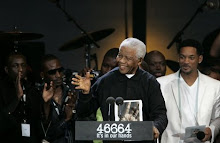
Hyde Park - England - Mandela 2008
Congress sends Bush bill to end visa restrictions on Mandela, other ANC members
By WILLIAM C. MANN , Associated Press Last update: June 27, 2008 - 5:07 PM
WASHINGTON - Congress sent President Bush a bill on Friday that once signed into law will allow Nelson Mandela to visit the United States without the secretary of state having to certify that he is not a terrorist. Negotiators from the Senate and the House agreed Thursday night on a final version of the bill to remove from U.S. databases the names of the former South African president and anybody else marked only because of a relationship with the African National Congress. Secretary of State Condoleezza Rice told lawmakers in April that she was embarrassed by the situation. The ANC has been South Africa's ruling party since the country's rebirth in 1994 as a majority-ruled democracy rather than a white-ruled state where the vote was based on race. The ANC was removed from the State Department's list of terror organizations years ago, but its members have remained on U.S. immigration watch lists. During the Cold War, the West considered the ANC a communist organization that wanted to bring down pro-Western South Africa. The Mandela situation came up as Rice testified in a legislative hearing in April. "It is frankly a rather embarrassing matter that I still have to waive in my own counterpart — the foreign minister of South Africa — not to mention the great leader, Nelson Mandela," Rice said. Mandela was awarded the 1993 Nobel Peace Prize with then-South African Prime Minister F.W. de Klerk for peacefully ending the apartheid segregation system and bringing the vote to all South Africans. He easily won the nation's first election where everyone could vote in 1993 and became president. Mandela turns 90 on July 18. He spent 27 years in prison for his work with the ANC, which the apartheid government banned in 1960. The State Department alluded to the sensitivity of the ANC situation in a report last year on global terrorism. In speaking of South African help against terrorists, the report noted: "The South African government is sensitive to distinctions between `terrorist organizations' and `liberation movements,' since the ruling African National Congress was long branded a terrorist group during the struggle against apartheid." Rep. Howard Berman , D-Calif., introduced the bill to remove the stigma from Mandela and other ANC members. "The Senate and House have now both affirmed that America's place is on the side of those who fought against apartheid, and there should be no discrimination in our legal code based on their ANC association alone," he said after announcing agreement on the final legislation.
In speaking of South African help against terrorists, the report noted: "The South African government is sensitive to distinctions between `terrorist organizations' and `liberation movements,' since the ruling African National Congress was long branded a terrorist group during the struggle against apartheid." Rep. Howard Berman , D-Calif., introduced the bill to remove the stigma from Mandela and other ANC members. "The Senate and House have now both affirmed that America's place is on the side of those who fought against apartheid, and there should be no discrimination in our legal code based on their ANC association alone," he said after announcing agreement on the final legislation.
Critical choice could be made in desegregation case By Tina Marie Macias • tmacias@theadvertiser.com • November 2, 2008
VILLE PLATTE - Ville Platte High School hit a landmark this year, its centennial.
And on Tuesday, Evangeline Parish Ward One voters will decide if the troubled school's 100th birthday will be the year the school closes or is reborn. That question has been a source of anxiety for Principal Peggy Edwards. When she watched the school's homecoming pep rally last month, a wave of sadness washed over her. "As I looked at the alumni and the students, I thought, 'This could possibly be the last time we do this,'" she said. "What will it do to Ville Platte and our community?" The predominantly-black school has been the center of a desegregation struggle for almost 45 years. After a court-ordered reorganization in 2004, the school created a medical academy and became the only school in the parish to offer Advanced Placement courses. Even with those student incentives, the school has been unsuccessful in attracting white students. Voters will weigh-in on a bond on Tuesday that would repair the school that greets students with crumbling red brick and ancient window-unit air conditioners jutting from the building. The ballot initiative is the third one this year and the seventh one since 1983. The tax would fund a $17.75 million bond that would be generated from property tax over the next 30 years. Homeowners who own more than $75,000 worth of property would see their property taxes increase 15.5 mills. On a $100,000 house, homeowners would pay about $3 more a month. Groups for and against the bond have participated in an aggressive campaign, both hoping the large-turnout common in a presidential election will help their cause. Those against the tax have said the bond is too excessive, even "greedy," said Mark Shuff, chairman of the Concerned Taxpayers Alliance of Ward One. He would prefer a tax that applies to all residents, like a sales tax. "It's too much for only a certain group of people to pay for it, which is the property owners, people who have worked all their lives and will have to pay for something that will help those who haven't," Shuff said. Evangeline Parish School District Superintendent Toni Hamlin disputes that the amount is excessive, and she and others in favor of the bond worry what it will mean for the school if the bond fails. The high school would close and students would be bused to different high schools. "It wouldn't feel right going to a different school and have them looking at us all weird," Ville Platte High School 10th-grader Taylor Scott said. "It would be like we're going into their school and bossing them around." If the city eliminates its only public high school, residents worry what it will do for the local economy and if it will create tension in an already divided community that is split between sending their children to the 77 percent black Ville Platte High and the 99 percent white Sacred Heart Catholic High School. "It's going to mess up the town," 11th-grader Jerinsky Anderson said. A troubled school Ville Platte High School was founded in 1908 and accredited by the state the same year. When Ville Platte became part of the newly formed Evangeline Parish in 1910, the school was the parish's model for education and its only state-accredited school. The school remained a whites-only school until 1965 when then-15-year-old Grace Vidrine chose to enroll and leave black-only James Stephens High School across town. At the time, students could choose which school to attend but there was still an established black and white school in the town. "I had a lot of bad experiences, but what I did find is that after every bad experience there was a good thing. If I got name-called, then I never once doubted that it was a God-appointed job for me," said Grace Vidrine Sibley, now the Interim Title I Supervisor at the Evangeline Parish School Board. In 1970, James Stephens High School was shut down, and Ville Platte High was completely integrated. At the same time, upset patrons founded Evangeline Academy in Vidrine, and enrolled nearly 2,000 white students in the private school. It closed down five years later because of lack of funding. The state refused to fund what it thought to be a white-flight school. Scores suffer Demographic data on Ville Platte High dating back to the 1960s was not immediately available from the state Department of Education. But an analysis of data spanning a decade shows that the school not only struggles with outdated facilities, a crumbling exterior and segregation, but also low test scores and attendance. In the 1998-99 school year, 63 percent of the school was black, while 36 percent was white. In the 2007-08 school year, 76 percent were black and 23 percent white. Forty percent of Evangeline Parish's student population is black. In order for a school to not be considered racially identifiable, its population should be within 15 percentage points of the parish's student population - or in Ville Platte High's case, up to 55 percent black. Free-or-reduced lunch students made up 75 percent of the population in the 1998-99 school year. Last year, 90 percent of students received free or reduced lunch. Every day, some 90 students are absent from the school. Last year, 40 percent of ninth graders who began the school year did not finish it. This year, the state declared the school "academically unacceptable" for the second year in a row. It's the lowest performing school in the parish and the lowest performing high school in Acadiana based on state performance standards. Principal Edwards acknowledges that the school has problems, but has instituted reforms, including tutoring, interventions and remedial classes. The school performance was still unacceptable last year, but it inched up to half a point away from an acceptable rating. Boom and change The 150-year-old city of Ville Platte is the parish seat of Evangeline Parish and best known for "Slap Ya Mama" Cajun seasoning and the smoked meat and cotton festivals. Ville Platte first appeared in the U.S. Census in 1900 when just 163 people lived in the agricultural town. By 1910, the town's population almost tripled with a population registered at 603 people. Like many towns in the early twentieth century, when the railroad arrived in Ville Platte, so did people. The town's population boomed throughout the first half of the 20th century when the population peaked at 9,692 people in 1970. Main Street, dotted with modest red-brick buildings that house the library and city hall, show what Ville Platte once was. But beyond Main Street the town is mostly inhabited by decrepit shotgun houses with peeling paint and foil-covered windows. Aside from the decaying neighborhoods, a plot of simple red-brick government houses takes up one part of the city, while historic plantation-style homes with large balconies and perfectly manicured lawns garnish the town's boundaries. A dying city Ville Platte's population took a turn in 1980 when it decreased by almost 500 people. By 2000, the population dropped to 8,145, a more than 16 percent decrease from 1970. While the black population in Ville Platte has never decreased, the white population peaked in 1970 with 6,890 and then began to decrease. In 2000, only 3,301 residents of the city of Ville Platte were white - fewer than half the number in 1970. The city is now 60 percent black and 40 percent white. Few people know Ville Platte as well as Ville Platte Gazette Publisher David Ortego. Born in Ville Platte in 1949, he graduated from Ville Platte High School in 1967. The former Evangeline Parish School Board member, teacher and administrator now lives slightly outside the city limits. He suggests the population moved out of the city, but moved to other areas of the Ward One voting area, which is bound by Bayou Joel Marcel to the west, Chicot State Park to the north and the border of Evangeline and St. Landry parishes to the east and south. Since Ward One peaked with a population of 17,470 in 1980, its population - particularly white population - has decreased. With 16,244, the ward is now 40 percent black and 60 percent white. "In the last election, the vote was mainly split down racial lines," Ortego said. Predominantly-black precincts voted for the bond, while predominantly white precincts voted against it. "The only way this can pass is if 90 percent of black residents vote and they all vote yes."
Voters reject bond proposal Tina Marie Macias • tmacias@theadvertiser.com • November 5, 2008
VILLE PLATTE - Ville Platte High School will most likely shut down and its 400 ninth- to 12th-graders will be bused to other high schools next year after voters narrowly rejected a bond proposal to build a new high school.
The 100-year-old school is the center of a 45-year-old desegregation struggle in Evangeline Parish. The U.S. Justice Department has continously said that the 77-percent black high school is not comparable to other high schools in the parish. Evangeline Parish Ward One voters struck down a $17.75-million bond that would have funded the construction of a new Ville Platte High School. With 100 percent of precincts reporting, 3,755 voters, or 48 percent, of Ward One voters voted for the bond proposal while 4,015 voters, or 51 percent voted no. This was the third time in 13 months and seventh time in 25 years that a bond to fund the construction of a new Ville Platte High school was up for consideration. Those against the bond say it's too excessive, while those for it say it's essential for the future of Ville Platte children. The bond would have raised taxes on property worth more than $75,000 by 15.5 mills, or about $3 for every $100,000 in property.
New Orleans positioning to make Bold Steps Forward
Having crushed the planet's peasants and converted food into just another commodity for global manipulation, the Lord's of Capital have unleashed upon humanity the threat - no, certainty - of mass starvation. The criminal mega-enterprise is centered in the United States, the former "breadbasket of the planet" whose massive conversion to biofuels has caused staple crop prices to skyrocket beyond the reach of hundreds of millions of the world's poor. The death of millions translates into profits in the trillions for the Lords of Capital, killers on a mass scale whose only talents lie in "the production of overlapping calamities, each more lethal than the last."
The Lords of Capital Decree Mass Death by Starvation
"No amount of emergency aid is sufficient to make up for the wild price rises that have already occurred."
Fidel Castro called biofuels "genocide," and he was right. And there can be no question as to the identity of the perpetrators of this global genocide: the Lords of Capital that formulate the foreign and domestic policy of the United States. That policy calls for 20 million acres of corn from states like Iowa to be converted from food to fuel. As should have been expected, such a massive diversion almost immediately pushed up the price of all other basic foodstuffs - a global disaster made quick and easy by the fact that, over the past several decades, planetary food production has been taken over by agribusiness - the speculative human parasites that control how food is bought and sold, and to whom, and for what purpose. These Lords of Capital are killers on a mass scale. "Hot" money has totally distorted the "marketplace" for life-sustaining goods, causing millions of the desperately poor in scores of countries to take to the streets. "In less than a year," writes the Guardian newspaper, in Britain, "the price of wheat has risen 130 per cent, soya by 87 per cent and rice by 74 per cent." These are nothing less than crimes against humanity, and cannot help but destroy the lives of millions who are already at the very edge of the precipice. "The Lords of Capital have imposed a triage of death by starvation on the planet." The so-called "market" - which is actually a club of super-rich men who distort and destroy everything of value to humanity that they touch - will be the death of us all, and much quicker than through the effects of global warming, which is also greatly accelerated by the ghoulish, greedy rush to grow food for cars rather than people. In such a murderous environment -manipulated purely for the profits of the Lords of Capital - neither trees nor peasants stand a chance. The United Nations says it needs about half a billion dollars for the most critical cases of starvation, but no amount of emergency aid is sufficient to make up for the wild price rises that have already occurred - and which will put trillions in the pockets of the Lords of Capital. Agribusiness wiped out small farmers in the U.S., and impoverished and pushed off the land untold millions of peasants, worldwide. Now the Lords of Capital have imposed a triage of death by starvation on the planet. The people who live on two dollars or less per day will have to die, and then, as prices rise, the three dollar people will follow. The men who profit from such mass murder use terms like "structural adjustment" and "economic fundamentals" to attach a veneer of rationality to a chaotic system they have created on the fly for the sole purpose of mega-theft. In the end, the Lords of Capital have mastered only one art: the production of overlapping calamities, each more lethal than the last. Soon, if not already, the Haitian poor will have no cooking oil to mix with clay for their diet of dirt pies. The Lords of Capital will have turned them into dirt for another Haitian's consumption and demise. Black Agenda - Glen Ford.
Continued
Motion to Recuse STATE OF LOUISIANA NUMBER: J-3868 IN THE INTEREST OF JUVENILE COURT JESSE RAY BEARD LASALLE PARISH, LOUISIANA MOTION TO RECUSE THE HON. J. P. MAUFFRAY, JR. NOW INTO COURT, through undersigned counsel, comes JESSE RAY BEARD, a juvenile, who moves the Court as follows: 1. Jesse Ray Beard (Jesse Ray) has been charged with a delinquent act as a juvenile and will therefore face adjudication in which the trial judge will be the sole determiner of fact. 2. The Honorable J.P. Mauffray, Jr. presides in this matter. 3. Judge Mauffray has made numerous statements, on numerous occasions, in different procedural postures (as will be further discussed at any hearing resulting from the instant Motion), to numerous individuals, which make clear he has pre-judged not only Jesse Ray's guilt, but the disposition for Jesse Ray as well. 4. A judge must be recused when he is biased, prejudiced, or personally interested in a case. 5. Where the judge is the finder of fact, a judge's comments expressing his belief that a defendant is guilty may be grounds for recusal. WHEREFORE, DEFENDANT PRAYS that Judge Mauffray recuse himself from this and all other matters involving Jesse Ray, or in the alternative, that a hearing be granted in front of an impartial judge to determine whether Judge Mauffray be recused from this and all other matters involving Jesse Ray. RESPECTFULLY SUBMITTED: ___________________________ DAVID J. UTTER Juvenile Justice Project of Louisiana 1600 Oretha Castle Haley Blvd. New Orleans, LA 70113 Telephone: (504) 522-5437 Fax: (504) 522-5430 STATE OF LOUISIANA NUMBER: J-3868 IN THE INTEREST OF JUVENILE COURT JESSE RAY BEARD LASALLE PARISH, LOUISIANA MEMORANDUM IN SUPPORT OF MOTION TO RECUSE THE HON. J. P. MAUFFRAY, JR. May It Please The Court: JESSE RAY BEARD (Jesse Ray), by and through counsel, respectfully moves this Court, pursuant to Louisiana Code of Criminal Procedure Article 671, Article I Section 2 of the Louisiana Constitution (Due Process), Article I Section 3 of the Louisiana Constitution (Right to Individual Dignity), and the 5th and the 14th Amendments to the United States Constitution, to recuse the Hon. J. P. Mauffray, Jr., from presiding over this case. This is a juvenile matter wherein Jesse Ray is prohibited from having a jury determine his guilt or innocence. See, e.g., La. Ch. C. Art. 808 (West 2008) (All rights guaranteed to criminal defendants by the Constitution of the United States or the Constitution of Louisiana, except the right to jury trial, shall be applicable in juvenile court proceedings.) Judge Mauffray will, therefore, be the sole determiner of fact in all proceedings in this case. Generally, a judge must be recused when he is biased, prejudiced, or personally interested in a case. La.C.Cr.P. art. 671. Indeed, article 671 mandates recusal where, for any reason, a judge is unable to conduct a fair and impartial trial. As is applicable in the instant matter, where the judge is the finder of fact, a judge's comments expressing his belief that a defendant is guilty may be grounds for recusal. State v. Willis, 915 So.2d 365 (La App.3 Cir. 2005). Judge Mauffray has made numerous statements, on numerous occasions, in different procedural postures (as will be further discussed at any hearing resulting from the instant Motion), to numerous individuals, which make clear he has pre-judged not only Jesse Ray's guilt, but the disposition for Jesse Ray as well. Indeed, Judge Mauffray has expressed his belief generally that Jesse Ray and his African-American friends are guilty, not only of the misconduct alleged in this matter, but of several other acts of misconduct as well. Additionally, Judge Mauffray's actions and statements in various proceedings for other Jena 6 members demonstrate his inability to conduct fair and impartial proceedings for Jesse Ray Beard. Judge Mauffray should, therefore, recuse himself. In the alternative, should Judge Mauffray refuse to do so, a fair and impartial court should do so for him. In any delinquency proceeding– and particularly in a delinquency case with the eyes of the world watching – it is imperative that Òjustice satisfy the appearance of justice." In Re Murchison, 349 U.S. 133, 136, 75 S.Ct. 623, 625, 99 L.Ed. 942, 946 (1955) (quoting Offutt v. United States, 348 U.S. 11, 14 (1955)). Thus, our courts have found that even the appearance of impartiality, as well as impartiality itself, outweighs the inconvenience caused by the recusal of the trial judge." State v. LeBlanc, 367 So.2d 335, 341 (La. 1979), citing State v. Lemelle, 353 So.2d1312 (La. 1977). As the federal courts have held: The question is not whether the judge is impartial in fact. It is simply whether another, not knowing whether or not the judge is actually impartial, might reasonably question his impartiality on the basis of all the circumstances. Rice v. McKenzie, 581 F.2d 1114, 1116-17 (4`'' Cir. 1978). See also Hall v. Small Business Administration, 695 F.2d 175, 179 (5th Cir. 1983) (disqualification required if a reasonable person, knowing all the circumstances, would harbor doubts about his impartiality.) Although judges in small towns like Jena may know extra-judicial facts about parties who come before them, all judges are expected to act fairly and impartially. Judge Mauffray's statements, however, to participants in proceedings, and his behavior in Jesse Ray's case and other cases known as the Jena 6, show that he is so personally interested, biased, and prejudiced, that he is unable to conduct a fair and impartial trial. See La. C. Cr. P. art. 671(1). For reasons stated in this Motion, article 671 sections (1) and (6) require that Judge Mauffray be recused from presiding over Jesse Ray's case. Judge Mauffray should, therefore, recuse himself from this and all other matters involving Jesse Ray. In the alternative, a hearing should be granted in front of an impartial judge. As will be shown at such a hearing, there is no question that Judge Mauffray should be recused because he is biased, prejudiced, and personally interested in this case and cannot conduct a fair trial. Date: _____________________ RESPECTFULLY SUBMITTED: ___________________________ DAVID J. UTTER Juvenile Justice Project of Louisiana 1600 Oretha Castle Haley Blvd. New Orleans, LA 70113 Telephone: (504) 522-5437 Fax: (504) 522-5430 C E R T I F I C A T E I hereby certify that a copy of the foregoing motion has been served upon Mr. Reed Walters, Assistant District Attorney, Parish of LaSalle, on this the ___ day of ______________, 2007. ___________________________________ DAVID J. UTTER STATE OF LOUISIANA NUMBER: J-3868 IN THE INTEREST OF JUVENILE COURT JESSE RAY BEARD LASALLE PARISH, LOUISIANA ORDER Considering the foregoing motion, it is ordered that Jesse Ray Beard be granted a hearing herein and that same be heard on the ___________ day of ____________________, at ___ o'clock AM/PM, contradictorily with the State of Louisiana. Jena, Louisiana, this ___ day of ___________________, 2008. ___________________________________ JUDGE J. P. MAUFFRAY, JR.
Baron & Jesse Ray
Wrongful-death lawsuit filed Taser incident in Winnfield; see PDF of lawsuit August 12, 2008 Lawsuit
NEW ORLEANS (AP) -- The family of a Winn Parish man who died after a police officer repeatedly jolted him with a Taser filed a wrongful-death lawsuit on Monday, Aug. 11. The federal lawsuit accuses Winnfield city officials of civil rights violations in the death of Baron "Scooter" Pikes, 21. Former Winnfield police officer Scott Nugent is accused of shocking a handcuffed Pikes nine times with a 50,000-volt Taser stun gun while arresting him on a drug possession warrant in January. A coroner ruled the death was a homicide.A grand jury in Winnfield convened on the case today and will continue the hearing on Wednesday.Taser International Inc. is named as a defendant in the lawsuit filed Monday by Latrina Thomas, who is the mother of Pikes' 4-year-old son.Thomas also is suing the city of Winnfield, its mayor, City Council, police chief and several police officers, including Nugent. The lawsuit seeks unspecified punitive and compensatory damages, plus fees and expenses."It's about justice," said Carol Powell Lexing, a lawyer for Pikes' family. "You can't bring (Pikes) back, but this can hold those responsible accountable for their actions."Nugent was fired in May, but he is appealing his dismissal. Nugent's lawyer, Phillip Terrell, said his client followed department protocols and didn't use excessive force."It's a tragedy any way you look at it," Terrell said.Terrell said he hadn't seen the lawsuit, but he echoed the suit's allegation that Winnfield failed to properly supervise and train its officers."If there's any culpability here, it's on Winnfield for not properly training police officers," Terrell said.Nevils, whose office received a copy of a state police report on Pikes' death last month, said his decision to take the case to a grand jury also was based on information that his office gathered "independently." Terrell said he doesn't expect his client to testify before the grand jury.Winnfield is about 40 miles northwest of Jena, where thousands of demonstrators gathered last year to protest the criminal cases against six black teenagers who were charged with beating a white student at a high school.Like the so-called "Jena Six" case, race has figured into the aftermath of the Winnfield case. Pikes was black; Nugent is white. Powell Lexing has accused city officials of trying to cover up a racially motivated case of police brutality.Racial tensions aren't the only parallel between the two cases. Mychal Bell, one of the Jena Six, is a first cousin of Pikes, according to Powell Lexing. gsscLawsuit
No decision yet in Taser death case; Winn Parish grand jury to reconvene Wednesday August 12, 2008
A Winn Parish grand jury today considered criminal charges against a former police officer involved in a Tasering incident that resulted in a suspect’s death, but no decision was made. The grand jury is scheduled to reconvene on Wednesday, Aug. 13. A spokesman for Winn Parish District Attorney Chris Nevils said the grand jury is hearing evidence in the death of 21-year-old Baron “Scooter” Pikes.Pikes was shocked nine times with a 50,000-volt Taser as he was arrested on a drug possession warrant in January. Nevils says former Winnfield police officer Scott Nugent has acknowledged using the device on Pikes.Nugent was fired but is appealing his dismissal. Pikes' death certificate classified his death as a homicide and stated he died as a result of cardiac arrest caused by nine shocks of 50,000 volts from a conductive electrical weapon, Winn Parish Coroner Dr. Randy Williams said. Pikes may have been dead before the last two shocks were administered, Williams said.Nevils has said his decision to send the case to the grand jury came after receiving the results of a Louisiana State Police investigation of the January incident, the coroner's investigation and an investigation done by his office.Winnfield Police in January said Pikes began acting strangely after being brought to the jail by police, prompting them to ask him if he had taken any drugs. Pikes is alleged to have told them he had ingested PCP and crack cocaine and was asthmatic.Williams said Pikes had no PCP or crack cocaine in his system and that there is no record of him having had asthma.What there was evidence of was that five minutes after police had Pikes in custody -- on his stomach and handcuffed after he had run from officers for about three minutes -- he was shot by Nugent with the Taser six times. Those six shots came within 190 seconds of one another, with the last five being "drive stuns," in which the Taser is stuck directly into the skin, and the first being from a cartridge.Minutes later, Pikes was carried to the patrol car, Williams said, where the probes of the Taser's cartridge were removed by the officer. Once at the police station, Pikes was ordered to get out of the patrol car but didn't.Williams said he isn't sure if Pikes was able to get out, but Nugent shot him with the stun gun again while Pikes was sitting in the back seat, the coroner said.Officers pulled Pikes out of the car, pushed him to the ground, and Nugent shot him with the stun gun two more times, Williams said. At this point, there was no reaction from Pikes, and he remained unconscious, Williams said. In total, Williams said, the nine shocks were all given within a 14-minute time span.Although Winnfield Police initially told the media that Pikes became "sick" while being booked at the jail, Williams said Pikes clearly was unconscious before he was carried into the Police Department.The clear cause of death, he said, was electrocution."Every other reasonable possibility has been excluded," Williams said.Nugent's attorney Phillip Terrell said Nugent is "anxious" to tell his side of the story and that in due time -- when "all the facts are made public" -- a different "appreciation" of what happened will be known. He stressed that both he and Nugent see what happened to Pikes as a terrible tragedy.Carol Powell-Lexing, who is representing Pikes' family, said the family wants justice by way of the perpetrator -- Nugent -- being held responsible for his actions."Mr. Pikes was executed by electrocution," she said. "And after his death (police) tried to cover it up, shove all this under the rug. ... (Pikes) didn't struggle with officers. He did nothing to cause him to be put to death."
Winn jury to continue hearing on Taser death Town Talk staff • August 13, 2008
A Winn Parish grand jury convened Tuesday to hear evidence in the death of a Winnfield man who was shot nine times with a Taser stun gun by a police officer. Bill Furlow, spokesman for Winn Parish District Attorney Chris Nevils, said Tuesday evening that the grand jury heard evidence and will meet again today to continue working. The grand jury will decide whether there is enough evidence to criminally charge the police officer involved. The Jan. 17 death of Baron "Scooter" Pikes was ruled a homicide by the Winn Parish coroner. Pikes died after he was shot with a Taser by former Winnfield Police Officer Scott Nugent. Pikes was shot nine times within 14 minutes, according to police reports. Nugent was suspended and then fired from the police force. He is appealing the termination. Winn Parish Coroner Dr. Randy Williams has said Pikes was handcuffed while being shot with the Taser and did not have PCP or cocaine in his system as officers alleged. Williams said Pikes might have already died before the last two zaps with the Taser. Pikes died of cardiac arrest. The family of Pikes filed a wrongful-death lawsuit Monday against not only Nugent but the city of Winnfield, the mayor, City Council, police chief and other officers on the force, in addition to Taser International Inc. The lawsuit alleges civil rights violations. It was filed by Latrina Thomas, the mother of Pikes' 4-year-old son.
‘Jena Six’ defendant Jesse Ray Beard allowed to attend high school out of state By Mandy M. Goodnight • mgoodnight@thetowntalk.com • August 12, 2008
Jesse Ray Beard is not returning to Jena High School this school year. The youngest of the “Jena Six” defendants will attend school in Connecticut, according to his attorney, David Utter. “This is a heck of an opportunity for Jesse Ray,” Utter said today. “Jesse Ray knows this is a great opportunity for him.”Beard, now 17, was one of five Jena High School students arrested and charged in connection with the December 2006 attack on a fellow student at the school. Beard is awaiting trial for that incident but had been on house arrest for 16 months for previous juvenile adjudications and alleged probation violation. During the summer, he was only allowed to leave his home to attend church, Utter said during a July hearing on the probation matter.Ninth Judicial District Judge Thomas Yeager, who is now hearing the Jena Six cases, released Beard for the summer to go to New York where Beard took a correspondence course, worked in a law firm and lived with an attorney. According to the motion requesting probation termination filed by Utter, Beard took an English course, was at work every day, had a physical fitness training regimen and joined a church in New York.Beard was to return to Jena on Monday in preparation for the start of Jena High classes on Thursday, but Yeager terminated his probation, allowing him to move and attend school out of state.Utter said his client will be attending a boarding school where 100 percent of the football team is accepted to college following high school graduation.Beard has been accepted to the Canterbury School, a private high school, where “Coach (Tom) Taylor, as indicated in his letter to the Court, is committed to help Jesse Ray Beard succeed academically and athletically at the Canterbury School and realize his dream of going to college,” the motion states.Utter says in the motion that Beard would be highly supervised as there is a faculty adviser who is assigned to students who live in the dorm and who oversees required two and a half hours each night of study time. Classes are held on Saturday, and all boarding students are required to attend a religious service on Sunday, the motion states.“... Jesse Ray Beard was given the chance to prove himself. He has done so in every respect, and now he asks the Court for the opportunity to reach his full potential at the Canterbury School in Milford, Connecticut,” the motion states.Yeager signed the motion last Wednesday, Aug. 6, granting the termination of probation.The teen does remain under conditions of his bail release in connection with the December 2006 incident.LaSalle Parish District Attorney Reed Walters issued no response today on the motion when The Town Talk contacted his spokesman for a comment. Jesse Ray
NAACP award given to Houma police chief By HOWARD J. CASTAY JR. Wednesday, August 13, 2008
Ignoring recent allegations of wrong-doing in the Houma Police Department, Terrebonne Parish's National Association for the Advancement of Colored People gave the city's top cop its highest honor.
Terrebonne Parish NAACP President Jerome Boykin presented Houma Police Chief Pat Boudreaux the organization's President's Award. Boudreaux, who remains out on paid leave, was on hand for the presentation at the 26th annual NAACP Freedom Fund Banquet Saturday at the Houma-Terrebonne Civic Center.
"The NAACP is not concerned about what complaints have been made against Chief Boudreaux. His record is unblemished," Boykin said.
"Furthermore, this NAACP will do all that we can to see that Chief Patrick Boudreaux remains the chief of the Houma Police Department," he said.
A clearly emotional Boudreaux told the crowd, "This is the best award I have ever received. It's the best because I got it for who I am, what I stand for and what I believe. It wasn't for something I did, and that's what makes it so special."
Boudreaux said when Boykin told him he was this year's recipient, "I told him, 'What about the letters? You need to read what the letters say.' In turn, Jerome responded, 'I don't need to read anything. I know who you are. I know what you stand for.'"
The crowd gave Boudreaux a standing ovation.
The "letters" the police chief spoke of surfaced shortly before the start of summer. Addressed to the Houma-Terrebonne Civil Service Board, the missives, penned by members of Boudreaux's department, accuse him of sexual harassment and one instance of alleged improper use of police equipment.
As the letters came before the board, Boudreaux went on a medical leave of absence to receive treatment for a spinal cord injury, which required physical therapy and, previously, chemotherapy and radiation.
As the date of his return to the job arrived in July, Terrebonne Parish President Michel Claudet placed Boudreaux on a 60-day paid administrative leave until the accusations could be investigated.
Boykin told the crowd on Saturday that the accusations didn't arise until the chief's illness resurfaced.
"You know, all last year and the year before in Jefferson Parish, there was a sheriff sick with leukemia," Boykin said, alluding to the late Sheriff Harry Lee. "Not once while he was seeking treatment were there allegations thrown against him. Not once while he was sick did someone start a movement to recall Harry Lee."
"Whoever is doing this against this man, whom I believe is one of the best chiefs we've ever had, better watch out. It's a vicious attack," Boykin warned. "Several officers saw their boss' sickness as a weakness. They'd better watch out."
Also at Saturday's banquet, Boykin was presented $35,000 for the local NAACP branch's scholarship program - $15,000 from Olive Garden and $20,000 from Outback, both in Houma. Since Boykin took the helm as president of the organization in 1995, the Terrebonne NAACP has awarded more than $250,000 to college-bound graduating seniors.
Hollywood actor Louis Gossett Jr. served as guest speaker and native son and actor Cordell Moore was master of ceremonies.
In his keynote address, Gossett saluted the 2008 graduating class. "Nothing is impossible," he told graduates.
At one point, looking out at the mixed races in the crowd, Gossett said, "Look at yourselves. How beautiful this is."
Gossett added, "Somewhere along on the line, this country has placed oil as its most valuable commodity. I disagree. I believe it is our children. What we plant in them is how the future will grow."
Later in the evening, Lafourche Parish President Craig Webre deputized Gossett. The "Roots" star was given an honorary commission.
Also, Claudet presented him with keys to Houma and Terrebonne Parish. gssc
National civil-rights group lauds locals By Robert ZulloStaff Writer Published: Friday, August 1, 2008 at 3:00 p.m. Last Modified: Friday, August 1, 2008 at 2:00 p.m.
KENNER -- A national organization that traces its history back to one of the most important moments in the civil-rights movement recognized three local community leaders for their commitment to making Terrebonne a better place for all the people who live here. The Southern Christian Leadership Conference, founded by the Rev. Martin Luther King Jr., after the Montgomery, Ala., bus boycott of 1955-56, presented Terrebonne NAACP President Jerome Boykin, local attorney Kevin Thompson and the Rev. Thomas Williams, pastor of Morning Star Baptist Church in Thibodaux, with a Community Service Award Tuesday night during the national organization’s annual convention, held this year in Kenner. The Rev. Vincent Fusilier Sr., pastor of St. Mathews Baptist Church and president of the Terrebonne chapter of the SCLC recommended the three for the award. "He’s a fighter," Fusilier said of Boykin, who he also credited with registering hundreds of voters during a drive about eight years ago. "He stands for the people that have been mistreated or misused. … He’s the man. He gets the job done." Boykin, who has been the local NAACP president for 13 years, said the recognition is appreciated, especially from a group that counts the son of the civil-rights movement’s most celebrated leader among its board of directors. King’s son, Martin Luther King III, was present at the convention to clasp the award-winners’ hands for a photo. "It was an honor to receive an award from a national organization, especially an organization that was founded by the Rev. Martin Luther King Jr.," Boykin said. Thompson, one of the first black attorneys in the parish to own his own practice, was nominated largely for his efforts to raise money for recreational-sports program, so the young athletes could afford to play in other parts of the state, Fusilier said "We purchase uniforms for the team, promote their events, help sponsor some of the trips," said Thompson, who also teaches adult Sunday school at Residence Baptist Church in Mechanicville. Like Boykin and Williams, Thompson described receiving the award and getting to meet King’s son as a "humbling experience." Williams, the pastor at Morning Star for 18 years, was honored for leading the charge in 1988-89 to get the Terrebonne School Board to recognize Martin Luther King Jr. Day as a holiday. "That day was an exciting day for us in Houma," Williams said. The award ceremony was an emotional moment, the preacher added. "I was thinking of what Dr. King stood for and what I tried to implement when I tried to get this day considered in Terrebonne Parish," Williams said. "It brought tears to my eyes." The weeklong convention -- the SCLC’s 50th -- was a gala affair that featured actress Marla Gibbs, the Rev. Al Sharpton, actor Clyde R. Jones, and a phoned-in speech from the Rev. Jesse Jackson. Staff Writer Robert Zullo can be reached at 985-850-1150. gssc
SCLC President says Dr. King Left a Business Plan for Success By George E Curry, Contributing WriterAugust 4, 2008
NEW ORLEANS (Special to the NNPA from the Afro-American Newspapers) - Charles Steele Jr., president of Dr. Martin Luther King's old organization, said the slain civil rights leader left behind a "business plan" for Black economic success. Opening the Southern Christian Leadership Conference (SCLC) 50th convention here, Steele said: "If you listen closely to his last speech at Mason Temple [in Memphis], Dr. King was giving us a business plan. Dr. King was taking care of business. If you have taken the most elementary business course-and even if you haven't-you know that the first thing you need when you go into business is a business plan." The SCLC president mentioned the early struggles of the founder of Radio One and TV One media companies. "Cathy Hughes talks about starting out in business and being asked, 'What is your business plan?' Her reply: 'I plan to stay in business.' SCLC plans the stay in business. "Our business plan is straight out of Dr. King's "I Have a Dream" speech. No, it's not about a dream, it's about economics. The part of the speech that you don't hear repeated every year around his birthday is the section related to economics. He declared, 'America has given the Negro people a bad check; a check which has come back marked 'insufficient funds.'" Steele said, "We're back here, where SCLC was founded, to say that we came back to get the check. Dr. King said 45 years ago, that America did not have enough funds in its bank account. They gave us a bad check. And today, we're back for a good one. If you can't give us a check, we'll take cash. But with your record, we need cash - and two forms of ID. We probably should ask for a DNA test as well." Speaking at the Pilgrim Baptist Church in suburban Kenner, La., Steele said: "Nearly five years after announcing we got stuck with a bad check, Dr. King went to Memphis to outline a business plan, not just a plan to stay in business. "Dr. King explained: 'We don't have to argue with anybody. We don't have to curse and go around acting bad with our words. We don't need any bricks and bottles, we don't need any Molotov cocktails. We just need to go around to these stores, and to these massive industries in our country, and say, 'God sent us by here, to say to you that you're not treating his children right. And we've come by here to ask you to make the first item on your agenda-fair treatment, where God's children are concerned. Now, if you are not prepared to do that, we do have an agenda that we must follow. And our agenda calls for withdrawing economic support from you.' Steele urged, "Note the emphasis on 'withdrawing economic support.' Now, for those who still did not get it, he was blunt: '...We've got to strengthen our Black institutions,' he said. 'I call upon you to take your money out of the [White] banks downtown and deposit your money in Tri-State Bank. We want a bank-in movement in Memphis... We have six or seven Black insurance companies in Memphis. Take out your insurance there. We want to have an 'insurance-in.' "Dr. King was clear: 'We begin the process of building a greater economic base. And at the same time, we are putting pressure where it really hurts.' If you still didn't get it, Dr. King explained it this way: 'Always anchor our external direct action with the power of economic withdrawal.'" Steele said it is even more important that Blacks learn to support other Blacks. "By 2011, annual Black spending power will reach $1.1 trillion, representing almost nine cents of every dollar spent in the United States, according to a University of Georgia study. Still, nothing leaves the Black community faster than a dollar." Steele noted that Dr. King, winner of the Nobel Peace prize, was an international figure when he was assassinated 40 years ago. Continuing in King's footsteps, Steele said SCLC will continue establishing conflict resolution centers around the world in hopes of bringing about peace. "These are exciting times. I wish Dr. King was alive to see the response to Barack Obama in Europe," Steele said. "People want change and that was evident in Europe as 200,000 people shouted, 'Yes, we can' in Germany. "And when Obama got to Paris and London, he was being treated like a rock star. The closest McCain got to Germany was eating in a small German restaurant." Steele said it would be a mistake to think Obama's popularity is limited to the fact that he is an African-American. "The world is embracing more than just Barack Obama; it's embracing a new kind of openness. Thousands applaud because Obama says he wants the U.S. to be a partner and not just try to dictate to other countries. It is a relationship of equals that they embrace." Contact Us - - Copyright 2005, Louisiana Weekly Publishing Company
Denham Springs-10 June 2008
DENHAM SRPINGS — Livingston Parish sheriff’s deputies investigated a complaint Thursday of racial slurs spray-painted on a truck, a vacant trailer and land in the vicinity of a black couple’s residence, deputies said. The slurs included “KKK” and the “N-word,” said Deputy Perry Rushing, spokesman for the parish Sheriff’s Office. The inquiry yielded no arrests, he said. A deputy could find no evidence to link to the crime to one woman who was questioned Thursday, Rushing said. He said the deputy could find no evidence of spray cans or the residue from them at the woman’s trailer or on her person. The woman consented to the search. Rushing also said the deputy had been called to the trailer park Wednesday for a disturbance and the woman was wearing the same clothes then as she was Thursday. He said deputies were called to 21461 Bonnie Drive, Denham Springs, at the Highland Ridge Trailer Park about 6:16 a.m. A deputy arrived there shortly before 7 a.m. The trailer park is off La. 16 north of Port Vincent. Rushing said the incident has been treated as a criminal damage case, but said the possibility exists it could be a hate crime depending on further evidence. State statutes would require deputies to establish the intent of any person or persons accused of spray-painting the slurs, he said.
Continued
Racist symbols appear in Metairie yard Black family stunned by 'this garbage' Tuesday, June 10, 2008 By Michelle Hunter More than four weeks after someone burned the letters KKK and the shapes of three crosses in the front yard of an African-American family's Metairie home, the grass still refuses to grow. And the family has not rushed to remove the symbols. "We left it out there because we want people in the neighborhood to know that there are people in their own backyards that believe in this garbage," said the family's patriarch, who asked not to be named when a reporter stopped by Monday. He said he doesn't want any publicity for himself, just public awareness that "racism is still alive and it is well." The Jefferson Parish Sheriff's Office and the FBI are investigating the damage as a possible hate crime. The symbols appear to have been made by a chemical, not by fire. They were reported May 7. No suspects have been arrested. ');} --> The property, in a predominantly white section of northeast Metairie, is home to a 35-year-old chef and a 34-year-old cosmetologist and their three children. They had lived in the house only five days when the symbols were discovered. "I just didn't know what to think," the man said, holding his 19-month-old son in one arm and his 5-month-old daughter in the other. "I didn't know what to say. I was just in awe." The father said he was afraid at first, then outraged. Now he's confused and frustrated. "I want to ask, 'Why?' We haven't been in the neighborhood long enough to cause a ruckus. We didn't do anything. It's 2008 and you still can't get past the racial issue?" Perhaps the hardest part for the couple was explaining to their 9-year-old son why there were so many police cars in the yard last month, the meaning of burned crosses and the Ku Klux Klan, and why someone might not like the boy because of his skin color. It was a painful conversation the father said he never imagined having to have in this day and age. But the family is determined to stay put, said the father, recalling that they have moved three times since Hurricane Katrina. "After my wife made me pack up all that stuff and move, I'm not going anywhere," he said with a laugh. He called the vandalism a cowardly act born of ignorance, and a similar reaction on his part would amount to stooping to the culprit's level. As a father, he said, he must be a better model for his son. I still have to be a responsible adult in this house," he said. "We're trying to teach them that they should not live in fear, to speak when spoken to, keep your hands to yourself and respect others." The family has been helped by neighbors who, one by one, came to their door and offered support as word of the incident spread. One of those neighbors was Dave Tibbetts, 52. "It's just unbelievable that this would happen," Tibbetts said.
The family is confident that the guilty party will be caught. The father said he's not looking for a stiff jail sentence or fines, but for the perpetrator to be sentenced to community service in an African-American neighborhood. "I want him . . . to come out of his comfort zone," the father said, "to see that black people are not animals. They are everyday people." . . . . . . . Anyone with information about the incident can call the FBI at (504) 816-3000 or the Sheriff's Office investigations bureau at (504) 364-5300. Michelle Hunter can be reached at mhunter@timespicayune.com or (504) 883-7054.
Shelling
Dupree voted back as Monroe City Schools superintendent No terms, no timeline set in new contract By Barbara Leader • bleader@thenewsstar.com • August 13, 2008
One vote changed, and the superintendent of a school district with schools in trouble and a declining student population kept his job.
James Dupree's position in charge of Monroe City Schools will not end Sept. 20, as was previously determined in two school board votes. On Tuesday, board member Brenda Shelling reversed her vote, saying she had been pressured to reverse her decision since votes in March and April to not renew Dupree's contract. "It's not easy when people tug you left and tug you right," she said. "But sometimes it's just a little nudge that pushes you over the edge. "There has been an all-out effort to hunt and destroy my family." Shelling's swing vote left Dupree in place by a 4-3 vote. Shelling, Stephanie Smith, Rodney McFarland and Jesse Handy voted to support his hiring. Vickie Dayton, Vickie Krutzer and Mickey Traweek held their positions not to rehire Dupree. Shelling made the motion to hire Dupree. "I would like to reject the applicants and move that we rehire Dr. Jim Dupree as superintendent for Monroe City Schools," she said before making her motion. The board appointed a search committee in April to advertise and interview applicants to replace Dupree. In a meeting Monday night, search committee members presented the board with the committee's top five choices for Dupree's replacement. Following the announcement, liaison Nerissa Bryant told the board one of the applicants had withdrawn. Early in Tuesday's meeting, search committee chairman Lorraine Slacks told board members another of the top five had withdrawn his name. Bryant told the board Monday that Tom Graves withdrew from contention because he did not believe students were the district's top priority. "It appears that there is a fourth vote to extend the contract," Traweek said before the vote. "I am unsure how he (Dupree) could feel comfortable and confident that it took three rounds to reach this vote." Traweek later expressed his intention to support Dupree if the board chose to rehire him. Shelling has long been considered to be the potential swing vote in the effort to rehire Dupree. She voted twice to hire a new superintendent. "I'd say what my husband always says: 'It's not easy being a Shelling,' " Shelling said. Dupree is officially rehired, but terms of his contract must be negotiated. Shelling's motion called for Dupree and board attorney Doug Lawrence to work out the details. Her motion specified no time and no salary range. Traweek questioned that the terms of the contract were not in the motion and requested Dupree be hired for the salary the board advertised for applicants. She did not accept Traweek's amendment, restated her motion and called for the vote. The vote was taken. Lawrence requested Dayton and Shelling participate in the negotiation. The contract will be brought back before the board at its next meeting. In other business, the board went into executive session for 30 minutes to discuss a possible ethics violation involving a candidate for principal of Carroll High School. Shelling's daughter, Cassandra Shelling, was one of the top three candidates for the position. Shelling proposed the executive session, saying the board was violating state law by considering her daughter for the job. "My concern is that we have violated state law by allowing my daughter to apply for a position that she should not have been allowed to apply for," Brenda Shelling said. The agenda stated that the board would hear and act on the superintendent's recommendation, but after the executive session, Dupree said he was not prepared to make a recommendation. "I regret that she is unable to progress in her profession here in the Monroe City Schools," Brenda Shelling said. "I am proud, very proud, that my daughter tried to come back into this system with pride and honor. "Thank you to those who supported her and to those that didn't, I pity you." Cassandra Shelling was dismissed from her position as a teacher when she was accused of conduct unbecoming a professional.
 Justears! & MORE


 Civil Rights denied-Marshal Law
 Blackwater,like Whitewater,like Watergate!